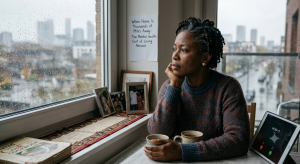
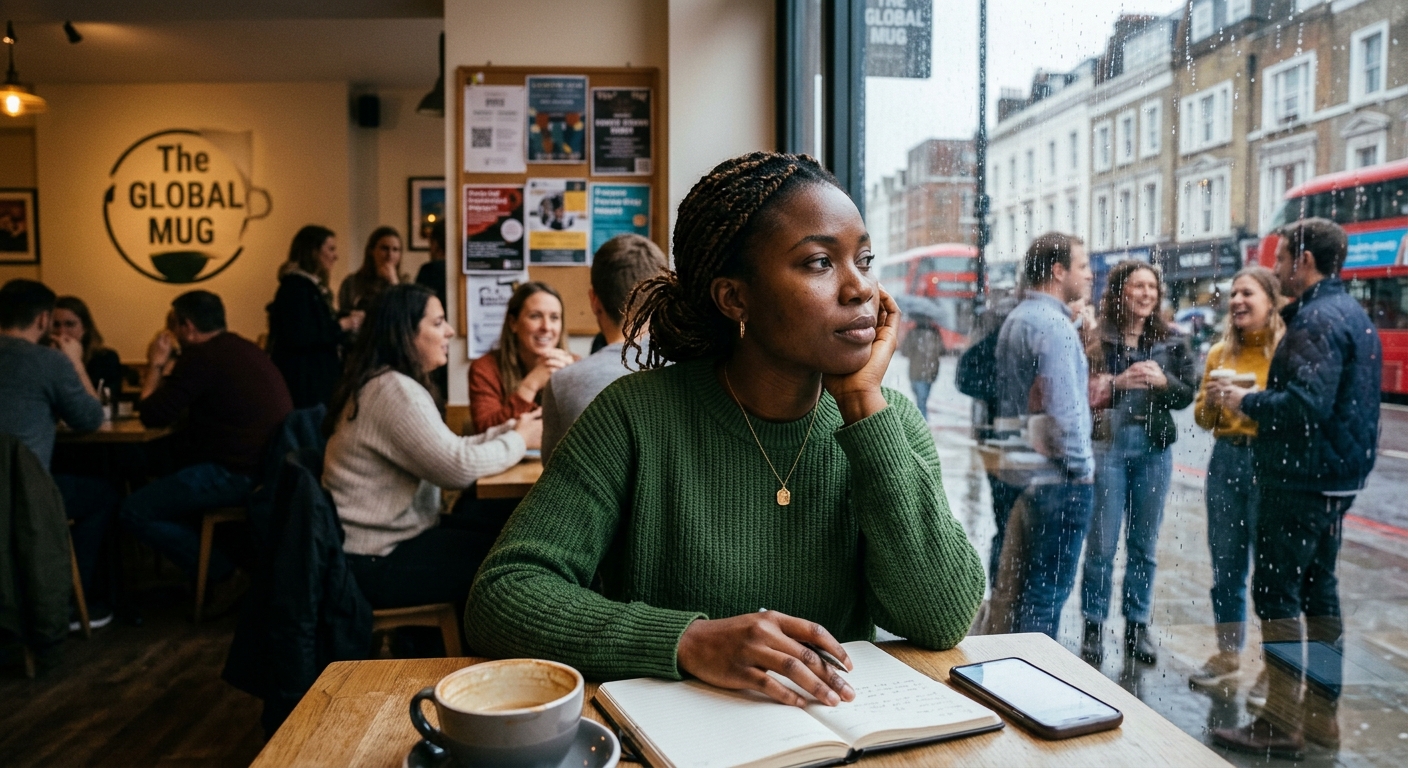
Is it just me, or does making new friends become an uphill task after moving abroad?
Sometimes I wonder if I am the only one who feels this way.
Back home, connection seemed to happen almost effortlessly. You could meet someone through a neighbour, a colleague, church, school, family, or even a casual conversation that started with, “Where are you from?” Before you knew it, you were talking, laughing, sharing stories, and perhaps even making plans to see each other again.
But moving abroad can change that.
Here, everyone seems to be busy. People have work, children, bills, appointments, responsibilities and their own lives to manage. Even when you meet someone you genuinely like, finding the time and opportunity to move beyond “Hi, how are you?” can feel surprisingly difficult.
And then there is trust.
Many people have learned to be cautious. They don’t easily open their homes, share personal struggles or allow new people into their inner circles. Sometimes, it isn’t because they don’t like you. They simply already have established friendships and don’t feel the same urgency to build new ones.
Meanwhile, you may be standing there wondering:
“So how exactly do adults make friends here?”
For immigrants, this question can carry an even deeper emotional weight.
Because when you move abroad, you don’t just leave behind a physical home. You can leave behind an entire social world.
The people who knew your story.
The friend who could call you unexpectedly and say, “I’m coming over.”
The neighbour who could knock on your door without an appointment.
The family members you could laugh with, argue with, eat with, and still be perfectly fine afterwards.
The people who understood your jokes without needing an explanation.
The familiar language, food, celebrations, traditions, and little cultural habits that made you feel understood without having to explain yourself.
Then suddenly, you find yourself in a new country where you may have a job, a house, responsibilities, and even people around you — yet somehow, you still feel alone.
And that kind of loneliness can be difficult to explain.
Because technically, you are not alone.
You see people every day.
You speak to colleagues.
You exchange pleasantries with neighbours.
You may even have hundreds of people on social media.
But there is a difference between being surrounded by people and feeling connected to people.
The World Health Organization describes loneliness as the distress that comes when there is a gap between the social connection we have and the connection we want or need. It also identifies moving to a new place or country and being a migrant as circumstances that can contribute to loneliness and social disconnection.
And perhaps that is one of the hardest parts of starting over abroad.
You are not necessarily looking for dozens of friends.
Sometimes, you just want one person you can genuinely call when life becomes too much.
Someone you can sit with without feeling like you have to perform.
Someone who will ask, “How are you really doing?” and actually wait for the answer.
Someone with whom friendship doesn’t feel like an appointment that has to be scheduled three weeks in advance.
So why does making friends as an adult become so difficult after moving abroad?
And more importantly, how do we build meaningful connections when the easy, familiar ways of making friends no longer exist?
Moving Abroad Can Make You Realise How Much You Relied on Familiarity
Sometimes we don’t realise how much our old environment helped us form relationships until we leave it.
Back home, you may have had years to build your social network without consciously trying.
Your childhood friend became an adult friend.
Your colleague became a family friend.
Your neighbour became someone you could trust.
Your children’s school introduced you to other parents.
Your religious community gave you people to celebrate with.
Even the people you didn’t particularly like were familiar.
You knew how people communicated. You understood the humour. You understood the culture. You knew what was considered polite, rude, friendly or intrusive.
Then you move somewhere new and suddenly, you have to learn all of that again.
You may find yourself wondering:
“Am I being too friendly?”
“Did I talk too much?”
“Should I ask for their number?”
“Would it be strange if I invited them over?”
“Do they actually want to be friends, or are they just being polite?”
That uncertainty can make you hold back.
And when two people are both holding back, nothing happens.
You smile.
You chat.
You say, “We should keep in touch.”
Then you both go home.
And that potential friendship quietly disappears.
Being Around People Is Not the Same as Feeling Connected
One of the biggest misconceptions about loneliness is that lonely people must have nobody around them.
That isn’t necessarily true.
You can be surrounded by people and still feel deeply disconnected.
You can sit in a busy workplace all day and come home feeling as though you haven’t had one meaningful conversation.
You can attend social gatherings every weekend and still feel like you don’t truly belong anywhere.
You can have hundreds of Facebook friends and dozens of WhatsApp groups and still have nobody you feel comfortable calling at midnight.
Mind UK explains that loneliness isn’t simply about being physically alone. Someone can have plenty of social contact and still feel lonely if they don’t feel understood, cared for or connected.
That distinction matters.
Because sometimes what an immigrant needs isn’t more people.
It is more meaningful connection.
If this feeling of loneliness after moving abroad sounds familiar, you may also want to read Loneliness After Moving Abroad, where I explored this experience more deeply.
Why Friendships Can Feel Different in a New Country
Every country has its own social culture.
In some places, people naturally spend a lot of time with extended family and neighbours. In others, independence and privacy are more strongly emphasised.
Neither is necessarily better.
But the difference can be difficult when you are used to one kind of social life and suddenly find yourself living within another.
You may come from a culture where dropping by someone’s home without an appointment is perfectly normal.
Then you move somewhere where people prefer advance notice.
You may be used to friends calling just to chat.
Now you find that people communicate mostly through occasional messages.
You may be used to friendships developing through family and community connections.
Now you have to deliberately search for opportunities to meet people.
None of this necessarily means people are unfriendly.
Sometimes the rules of connection are simply different.
And learning those rules takes time.
Then There Is the Trust Problem
This is another part of the conversation we don’t always discuss.
Making friends requires vulnerability.
But vulnerability requires some level of trust.
And trust doesn’t always come quickly.
Adults have histories.
People have been betrayed by friends.
They have gone through difficult relationships.
They have experienced racism, discrimination, manipulation, gossip, broken friendships or simply learned to protect their privacy.
So when you meet someone new, they may like you without immediately letting you into their personal world.
And you may do the same.
This can create an interesting situation where two people want connection but are both afraid of becoming vulnerable.
You wait for them to open up.
They wait for you.
Nobody wants to appear desperate.
Nobody wants to be rejected.
Nobody wants to share too much too soon.
And eventually, the opportunity passes.
This is why building genuine friendships as an adult often requires patience.
Trust doesn’t have to be given all at once.
Sometimes it is built through small, consistent experiences.
A conversation.
Another conversation.
A shared interest.
A coffee.
A laugh.
A person remembering something you told them.
Someone checking in when you mentioned that you weren’t having a good week.
Little things.
That’s how familiarity gradually becomes trust.
The Loneliness of Starting Over
There is a particular kind of loneliness that comes with starting over.
It isn’t necessarily the loneliness of having nobody.
It is the loneliness of not having your people yet.
You may have everything you moved abroad for.
Perhaps you have a better job.
Perhaps your children are doing well.
Perhaps you have achieved something you once dreamed about.
Perhaps you are grateful for the opportunity to live where you are.
And yet, there are moments when you miss the simplicity of belonging.
You miss being known.
You miss being able to speak without explaining the background.
You miss people who understand where you are coming from because they came from somewhere similar.
And sometimes you may feel guilty for admitting that.
You think:
“I should be grateful.”
“I have a good life.”
“Why am I feeling lonely?”
But gratitude and loneliness can exist at the same time.
You can be grateful for your new life and still miss your old one.
You can love your new country and still miss home.
You can be happy about the opportunities you have found and still wish you had someone nearby to share them with.
Two truths can exist together.
If you have experienced this deeper emotional side of migration, you may also find When Home Is Thousands of Miles Away: The Mental Health Cost of Living Abroad helpful. Sometimes what we miss most isn’t simply a country or a place — it is the sense of familiarity and belonging we had there.
Don’t Mistake Acquaintances for Friendship
One of the frustrating things about adulthood is that you can know many people without actually having friends.
You know the colleague who always says hello.
You know the parent you see at school.
You know someone from church.
You know your neighbour.
You know someone from your children’s activities.
You know someone from work.
But knowing someone’s name is not the same as knowing their heart.
Friendship usually requires something more.
It requires time.
Consistency.
Shared experiences.
Vulnerability.
Mutual effort.
And sometimes, someone has to take the first step.
That first step can feel uncomfortable.
But perhaps we have become too afraid of appearing needy.
We think initiating a friendship makes us look desperate.
It doesn’t.
Wanting connection is human.
So, How Do You Actually Make Friends as an Adult?
The answer isn’t to force friendships.
It is to create more opportunities for connection.
1. Start with places where you can see the same people repeatedly
Friendships are often easier to build when you repeatedly encounter the same people.
Instead of attending one random event and expecting to find your best friend, consider joining something you can attend regularly.
It could be:
- A book club
- A fitness class
- A community group
- A cultural association
- A faith community
- A parenting group
- A volunteering opportunity
- A creative class
- A professional network
- A sports group
- A local walking group
Mind also recommends exploring shared-interest groups, volunteering, local community groups and other environments where people can gradually build connections.
The goal isn’t necessarily to walk into the room and immediately make a friend.
The goal is to become familiar.
Sometimes familiarity is the beginning of friendship.
2. Don’t underestimate small conversations
You don’t have to start with a deep conversation.
Sometimes friendship begins with something incredibly ordinary.
“How long have you been coming here?”
“I love your bag. Where did you get it?”
“Your child is in Year 7 too?”
“Have you tried this class before?”
Small talk can feel meaningless, but it can be the bridge to something deeper.
And if the conversation goes well, don’t be afraid to have another one the next time you meet.
3. Let people know you are open to friendship
Sometimes we expect other people to make the first move.
But what if they’re waiting for the same thing?
If you meet someone you genuinely connect with, try saying:
“I’ve really enjoyed talking to you. Would you like to grab coffee sometime?”
It may feel awkward.
You may worry they’ll say no.
But remember: rejection isn’t proof that there is something wrong with you.
Sometimes people are busy.
Sometimes their circumstances don’t allow new friendships.
Sometimes the chemistry simply isn’t there.
That’s okay.
4. Give friendships time to grow
One conversation doesn’t make a friendship.
Neither does one coffee.
Friendship is usually built through repeated contact.
You may need to initiate more than once.
You may need to be patient.
You may have to move beyond the first layer of polite conversation.
And sometimes you may discover that someone you initially thought you had nothing in common with becomes a very important person in your life.
5. Don’t expect one person to fulfil every social need
This is particularly important.
Perhaps one friend is the person you talk to about work.
Another loves going out.
Another shares your cultural background.
Another is someone you can discuss parenting with.
Another is your deep-conversation person.
Friendship doesn’t have to be all-or-nothing.
A healthy social life can contain different kinds of relationships.
But What If You Keep Trying and Nothing Happens?
This is where things can become emotionally difficult.
You attend events.
You smile.
You introduce yourself.
You try to connect.
And still, nothing seems to develop.
Please don’t immediately conclude:
“Nobody likes me.”
Starting over socially can take time.
Some friendships happen quickly.
Others take months.
Some never develop at all.
And that’s okay.
Mind recommends taking things slowly when loneliness has lasted for a while and avoiding putting too much pressure on yourself.
You don’t need to turn every pleasant conversation into a friendship.
You don’t need to force chemistry.
You don’t need to become friends with everyone.
You simply need to remain open to the possibility of finding your people.
Don’t Let Social Media Fool You
This one deserves attention.
You open Instagram or Facebook and see people having dinner together.
Someone is celebrating a birthday surrounded by friends.
Another person posts a weekend getaway.
Someone else is laughing with a group of friends who appear to have known each other forever.
And suddenly you look at your own life and think:
“What am I doing wrong?”
But social media gives us snapshots, not entire lives.
You don’t know who feels lonely after the photograph is taken.
You don’t know which friendship is struggling behind the scenes.
You don’t know who went home from that beautiful gathering feeling completely disconnected.
So don’t compare your private loneliness with somebody else’s carefully selected public moments.
And Please Don’t Forget the Friends You Left Behind
Sometimes, in our attempt to build a new life, we become so focused on making new friends that we forget the people who already love us from a distance.
Distance doesn’t have to mean disappearance.
Call them.
Send a voice note.
Schedule a video call.
Share photographs.
Celebrate birthdays together virtually.
Tell them when you’re struggling.
Of course, old friendships may change after migration.
People grow.
Life changes.
Time zones make communication difficult.
But some friendships survive distance precisely because both people continue to make the effort.
And sometimes reconnecting with someone from home can remind you that you haven’t lost the person you were before you moved.
Your Mental Health Matters Too
Loneliness isn’t simply an inconvenience.
Long-lasting loneliness can affect emotional wellbeing, and social connection is increasingly recognised as an important part of health.
The WHO reports that loneliness and social isolation are widespread globally and are associated with significant effects on mental and physical health.
The NHS also notes that positive, supportive relationships can help combat loneliness and support mental wellbeing.
So if your loneliness is beginning to affect your mood, sleep, confidence, daily functioning or overall wellbeing, don’t dismiss it as something you simply have to endure because you are an immigrant.
You deserve support too.
If you are in the UK, organisations such as Mind provide information and support around loneliness and social isolation, including suggestions for finding community and peer support.
External resource: Mind — Loneliness and how to manage it
External resource: NHS Every Mind Matters — Healthy relationships and mental wellbeing
Maybe You Don’t Need to Find Your People All at Once
Perhaps this is the part we need to hear most.
You don’t have to arrive in a new country and immediately recreate the social life you left behind.
You don’t have to find your best friend in the first year.
You don’t have to attend every event.
You don’t have to become extremely outgoing.
You don’t have to pretend that everything feels easy.
You are allowed to take your time.
You are allowed to miss home.
You are allowed to feel lonely.
And you are allowed to try again after an awkward conversation or a friendship that didn’t work out.
Maybe connection begins more quietly than we expect.
With the neighbour you finally speak to.
The colleague you invite for coffee.
The person sitting beside you at church.
The parent you meet at your child’s school.
The woman you keep seeing at the same exercise class.
The friend-of-a-friend you almost didn’t speak to.
One conversation becomes two.
Two become three.
And slowly, someone who was once a stranger becomes familiar.
Then one day, you realise something has changed.
You have someone to call.
Someone who knows your story.
Someone who understands when you say, “I’m having one of those days.”
Someone who doesn’t need you to explain everything.
And perhaps that is what we are really searching for when we say we want to make friends abroad.
Not popularity.
Not a huge social circle.
Not hundreds of contacts.
We are searching for belonging.
If You Are Struggling to Make Friends After Moving Abroad
Please don’t assume there is something wrong with you.
You are navigating a new environment, a different culture, unfamiliar social expectations and perhaps a completely different rhythm of life.
That takes adjustment.
Be patient with yourself.
Keep showing up.
Keep having conversations.
Keep putting yourself in places where connection is possible.
But don’t force yourself into friendships that make you feel unwanted, disrespected or emotionally drained simply because you are afraid of being alone.
The goal isn’t just to find people.
It is to find people with whom you can be yourself.
And if you’re still waiting for those people to come along, remember this:
Your loneliness today does not mean you will always be lonely.
Sometimes, belonging takes longer to find when you have had to leave everything familiar behind.
But that doesn’t mean it isn’t waiting for you somewhere ahead.
A Final Word to the Immigrant Who Feels Alone
Maybe nobody tells you this when you move abroad.
Everyone talks about getting the visa.
Getting the job.
Finding accommodation.
Settling the children.
Learning the transport system.
Understanding the weather.
Building a career.
Starting again.
But nobody talks enough about the emotional work of building a life where you actually feel that you belong.
And perhaps that is why making friends can feel so difficult.
You are not simply looking for someone to have coffee with; you are rebuilding community, learning how to trust again, learning how to connect in a different culture, and lastly learning how to be known in a place where nobody knew you before.
That takes courage.
So if you’re an immigrant sitting somewhere tonight wondering why you haven’t found your people yet, please be gentle with yourself.
You are not behind.
You are building something from scratch.
And sometimes the most meaningful friendships are not the ones we find immediately.
They are the ones we slowly build — conversation by conversation, coffee by coffee, act of kindness by act of kindness — until one day, this unfamiliar place doesn’t feel quite so unfamiliar anymore.