
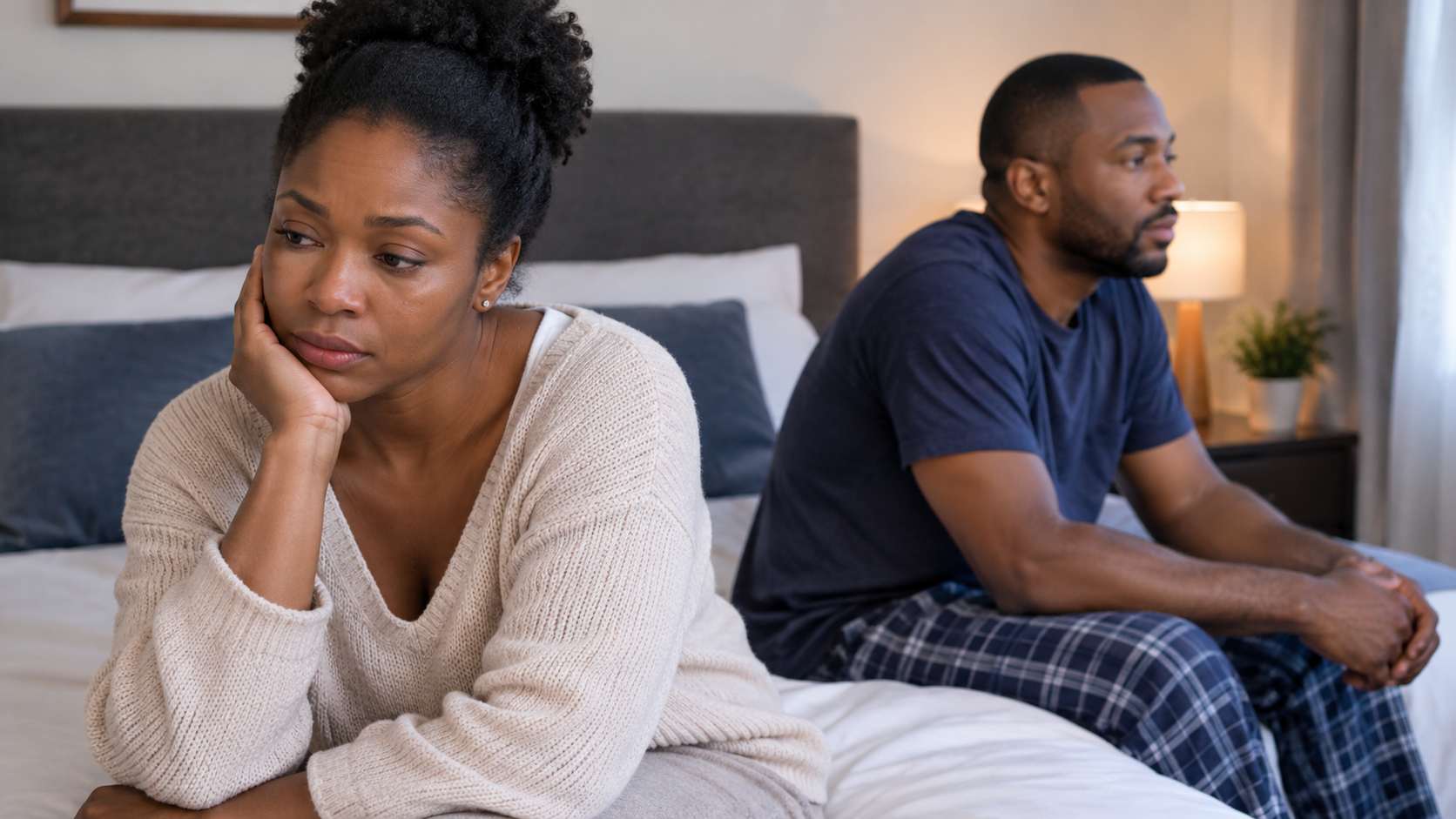
When I listened to UNHEALTHY, a song by Anne-Marie featuring Shania Twain in 2023, something stayed with me long after the music stopped. I kept thinking about women who find themselves in relationships that hurt them, yet struggle to walk away.
From the outside, it can be easy to wonder why someone would remain in a relationship that leaves them unhappy, emotionally drained, or questioning their worth. We may ask why she doesn’t simply leave, especially when the signs of an unhealthy relationship seem obvious to everyone else.
But I think there is more to that decision than many of us realise.
Sometimes, it is love. Sometimes, it is the years invested in the relationship, the memories created, the hope that things will change or the fear of starting again. For some women, children, financial dependence, family expectations or concerns about their safety can make leaving far more complicated than it appears.
And sometimes, a woman may recognise that something is wrong without yet feeling ready or able to do anything about it.
This is what I want us to talk about.
Not to judge women who stay. Not to suggest that leaving is always simple. And certainly not to blame someone for the way another person treats her. Instead, I want us to look more closely at the patterns that can develop in unhealthy relationships, how they may affect a woman’s sense of self, and what support and healing can look like when she begins to consider a different future.
When Love Becomes a Reason to Keep Enduring Pain
Most people do not enter relationships expecting to be hurt. They fall in love with someone’s kindness, humour, affection, attention, and the future they imagine building together.
When things begin to go wrong, those memories do not simply disappear.
A woman may remember how her partner supported her during a difficult period or how happy they were when they first met. When the relationship becomes painful, she may hold on to those memories, hoping the person she fell in love with will return.
Perhaps her partner apologises after an argument and promises to change. For a while, things improve, and she begins to believe they have finally turned a corner. Then the hurtful behaviour returns.
She may find herself thinking, Perhaps this time will be different.
There is nothing wrong with wanting a relationship to improve. Every relationship has difficult moments, and people can learn from their mistakes. The concern arises when hurtful behaviour becomes a repeated pattern and one person is left doing most of the work to keep the relationship together.
The good moments do not erase the harm caused by repeated hurtful behaviour.
Love may explain why someone wants to stay, but love alone cannot make an unhealthy relationship safe or fulfilling.
Why Leaving Can Feel So Difficult
There is a tendency to speak about leaving as though it involves making one decision and walking away. In reality, the decision can involve fear, grief, finances, family responsibilities and uncertainty about the future.
Here are some reasons a woman may struggle to leave even when she knows she is unhappy.
1. She Is Still Hoping Things Will Change
Hope can keep us going through difficult seasons. In relationships, however, it can sometimes keep us waiting long after repeated experiences have shown us that something needs to change.
A woman may believe things will improve when financial pressures ease, when the children grow older or when her partner finally understands how much she is hurting.
She may think that if she becomes more patient, explains herself better or makes fewer demands, they will eventually find happiness together.
Wanting to repair a relationship is not a mistake. But lasting change requires both people to acknowledge the problem and take responsibility for their actions.
One person cannot repair a relationship alone, no matter how much love, patience, or effort she brings to it.
2. She Is Afraid of Starting Again
After years of sharing a life with someone, imagining a different future can be frightening.
She may worry about living alone, dating again, facing family questions, or rebuilding her life from the beginning. If she has spent most of her adult life in the relationship, she may no longer know what life outside it would look like.
These fears are real. But being afraid of the unknown does not mean she must remain unhappy forever.
She may need time, support and practical information before she can understand what options are available to her.
3. She Is Worried About Her Children
For a mother, the decision may feel especially complicated. She may worry about disrupting her children’s lives, managing childcare alone or providing financially without her partner.
She may believe that keeping the family together is the best way to protect them.
However, it is also important to consider the environment in which children are growing up. Constant conflict, intimidation, or fear can affect family life, too.
Every family’s circumstances are different, and no outsider can make this decision for a woman. Her wellbeing and her children’s safety deserve careful consideration, alongside the practical support she may need.
4. Financial Dependence Makes Leaving Difficult
Sometimes, the barrier is money.
A woman may have given up work to raise children, moved abroad for her partner, or become financially dependent on the household income. She may have no savings, nowhere to stay, and no clear idea how she would manage rent, bills, and childcare.
If her partner controls the money or prevents her from working, leaving may be even more complicated.
Telling someone in this position to walk away without acknowledging these realities is unlikely to help.
What may help is exploring practical options, such as confidential advice, housing assistance, financial support, and information about her rights. She does not have to solve everything in one day to begin understanding her choices.
5. She Has Started Doubting Herself
Repeated criticism, humiliation and dismissal can gradually affect a person’s confidence.
Imagine raising a concern only to be told that you are too sensitive or that everything is your fault. Over time, you may begin questioning your own judgement.
You might wonder whether you misunderstood what happened or whether you are expecting too much. You may even find yourself apologising for expressing perfectly reasonable feelings.
When someone repeatedly undermines your confidence, making decisions can become difficult.
A woman in this situation deserves space to speak openly, reflect on what has happened, and begin rebuilding trust in herself. She does not have to be a perfect partner to deserve respect.
6. Family Expectations Keep Her Silent
In some families and communities, separation carries a heavy stigma. A woman may fear disappointing her parents, being criticised by relatives, or being told that a good wife should endure whatever happens in her marriage.
Of course, relationships require patience and compromise. But there is a difference between working through ordinary disagreements and enduring repeated humiliation, intimidation or abuse.
Family and cultural values can be important, but they should not be used to silence someone who is hurting.
Sometimes, what a woman needs most is one person who will listen without judging her or immediately telling her what to do.
7. She Is Afraid of What Might Happen If She Leaves
When abuse is involved, leaving can bring additional risks.
A woman may fear threats, stalking, violence, losing access to her children, or being unable to protect herself after separation. Her partner may have threatened to harm her or make her life difficult if she leaves.
In these circumstances, staying may feel like the safest option at that moment.
It is important not to assume that leaving is always the safest immediate action. Specialist domestic abuse organisations can help women consider their circumstances and develop safety plans.
The NHS offers guidance on recognising domestic violence and abuse and finding support.
A woman who fears her partner does not have to confront him or announce her plans to prove that she is serious. Her safety comes first.
8. She Has Lost Sight of Herself
Sometimes, the hardest part is realising how much of yourself you have set aside.
Perhaps you have stopped seeing friends because it causes arguments. Maybe you no longer pursue your interests, express your opinions, or make plans without worrying about your partner’s reaction.
You may have become so focused on keeping the peace that you rarely ask yourself what makes you happy.
You can still be working, raising children, and fulfilling your responsibilities while feeling disconnected from the person you used to be.
If this sounds familiar, remember that your needs matter, too. You are allowed to have friendships, interests, opinions and ambitions that do not revolve around your partner.
Reconnecting with yourself can begin with something small: acknowledging how you feel, recognising what you miss and allowing yourself to consider what you need.
When Staying Becomes a Quiet Grief
Not every painful relationship involves constant arguments. Some couples share a home and a bed while feeling emotionally distant from each other.
A woman may grieve the marriage she hoped to have, the affection that has disappeared, or the future she once imagined. She may attend family gatherings, smile in photographs, and tell everyone she is fine while carrying sadness she does not know how to explain.
This hidden grief can be particularly lonely because other people may believe everything is all right.
I explored this experience in my article, The Silent Grief of Staying in an Unhappy Marriage: The Pain Nobody Sees.
Sometimes, recognising that grief is the beginning of understanding what has been happening inside you. You do not have to dismiss your feelings simply because your life looks fine to other people.
When the Relationship Feels Like Work All the Time
Every meaningful relationship requires effort. There will be misunderstandings, difficult conversations, and times when one person needs extra support.
But what happens when you are always the one initiating conversations, apologising, making compromises or trying to repair the connection?
There is a difference between two people working on their relationship together and one person working endlessly to keep it alive.
A difficult season does not automatically mean a relationship should end. What matters is whether both people are willing to acknowledge problems, take responsibility, and make meaningful efforts to address them.
If this resonates with you, you may also find my article When a Relationship Feels Like Work helpful.
What Can You Do When You Know Something Needs to Change?
Recognising that a relationship is hurting you does not mean you must have all the answers immediately. You can take time to understand your feelings and explore your options.
Start by acknowledging what is happening. Rather than focusing only on the occasional good day or another promise to change, consider the overall pattern. Do you feel respected? Can you express your concerns without fear? Are apologies followed by meaningful changes in behaviour?
Talk to someone you trust. If it is safe to do so, speak with a trusted friend, relative or professional who will listen without shaming you. If you suspect abuse, a specialist domestic abuse service can help you explore your options confidentially.
Think about your safety. If there are threats, violence or controlling behaviour, seek specialist advice before making changes that could put you at risk. You don’t have to confront your partner to prove you are serious.
In the UK, the National Domestic Abuse Helpline provides free, confidential support around the clock. You can call 0808 2000 247. If you are in immediate danger, call 999.
Reconnect with yourself. Where it is safe, make room for supportive friendships, personal interests and activities that help you feel like yourself again. These steps do not replace specialist support where abuse is involved, but they can remind you that your identity matters beyond your relationship.
Remember that you cannot change another adult for them. You can communicate your needs and establish boundaries where it is safe, but you cannot make someone take responsibility for their behaviour. You are not responsible for another person’s decision to abuse or control you.
Allow yourself to explore your options. You may need time to consider your finances, housing, family responsibilities and available support. If abuse is present, Women’s Aid offers guidance on leaving a relationship safely.
For readers outside the UK, please contact your local domestic abuse support service or a trusted organisation that assists people experiencing relationship abuse. They may offer confidential advice, safety planning and information about services in your area. If you are in immediate danger, contact your local emergency services. If someone monitors your phone or internet activity, seek help using a device that is safe for you, if possible.
If You Are the Friend Watching Her Stay
Perhaps you are reading this because someone you care about is in a relationship that worries you.
You have watched her cry, heard her explain away hurtful behaviour or listened to her promise that things will be different. You may feel frustrated because you want her to leave.
But repeatedly asking, “Why don’t you just leave?” may make her feel that she must defend herself rather than talk honestly about what she is experiencing.
Instead, let her know that you care. Listen without blaming her, remind her that she deserves respect, and offer practical support where you can.
If you are worried about abuse, help her access specialist information when it is safe to do so. You may not be able to make the decision for her, but you can help her feel less alone.
Sometimes, knowing that someone will listen without judgement is more helpful than receiving another lecture about what she should do.
You Deserve a Relationship That Does Not Cost You Yourself
When I think about the women who recognise that something is wrong but struggle to walk away, I keep returning to the need for more understanding and fewer assumptions.
We need to acknowledge the complexity of love, shared responsibilities, financial pressures, fear, and the uncertainty of starting again.
If you see yourself in any part of this article, please do not use it as another reason to criticise yourself.
You may love your partner and still recognise that the relationship is hurting you. You may treasure beautiful memories while acknowledging what is happening now. You may not be ready to make a decision, and you can still deserve support and the opportunity to explore your options.
You do not have to prove your strength by enduring pain in silence. Nor do you have to make a decision before you feel safe enough to do so.
Take your feelings seriously. Reach out to someone who can support you, and if you are experiencing abuse, seek specialist advice about your safety.
Most importantly, remember that your wellbeing matters.
Love should not require you to disappear from your own life.
You deserve to be heard, to feel safe and to have room to be yourself. Whatever your circumstances, you deserve compassion as you work out what comes next.