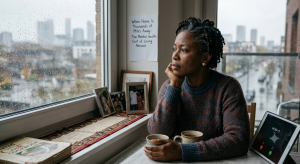

There was a time when I believed that being a good person meant being available to everyone.
I would tolerate certain behaviours, make excuses for people, keep quiet when something bothered me and sometimes remain in relationships long after I knew they were no longer good for me.
Experience has taught me differently.
As someone who is committed to safeguarding my mental health, I have become much more intentional about the people I allow into my life. I pay attention to the places I go, the activities I engage in and, most importantly, the people I surround myself with.
To be honest, I would rather be alone than constantly surrounded by people who leave me emotionally drained, confused, anxious or unhappy.
That does not mean I believe everyone who annoys us or disagrees with us is toxic. We are all imperfect. We all have bad days, difficult seasons and moments when we may not behave at our best.
But there is a difference between being around someone who is occasionally difficult and repeatedly being exposed to behaviour that damages your peace, confidence or emotional well-being.
The people around us can influence how we feel about ourselves and how we experience everyday life. The NHS also recognises that healthy, supportive relationships are important to mental well-being and recommends setting boundaries and taking care of yourself within relationships.
So, who are the people we may need to create some distance from?
Here are seven types I have learned to be particularly careful around.
1. The Emotional Energy Drainer
Some people seem to leave you exhausted after every conversation.
They constantly complain, focus on problems, demand your attention and rarely seem interested in what is happening in your life.
You listen.
You encourage them.
You offer advice.
You try to be there for them.
But when you need someone to listen to you, there is suddenly nowhere to be found.
I have learned that compassion does not mean allowing someone unlimited access to my emotional energy.
A person can genuinely be going through a difficult time without being a bad person. But if every interaction leaves you emotionally exhausted, it may be time to reconsider how much access that person has to you.
Sometimes the healthiest response is not confrontation. It is simply creating a little distance.
2. The Person Who Thrives on Drama
There are people who seem unable to live without conflict.
There is always an argument.
Someone is always offending them.
There is always a new problem, a new disagreement or another story that requires your attention.
Before you know it, you have been pulled into a situation that had nothing to do with you in the first place.
I have learned to ask myself a simple question:
“Does this situation actually belong to me?”
Because not every argument requires my participation.
Not every disagreement requires my opinion.
And not every piece of gossip deserves my attention.
Protecting your mental health sometimes means refusing to be recruited into other people’s chaos.
3. The Manipulator
This is one of the people I believe we should be particularly careful around.
Manipulation can be subtle.
It may appear as guilt-tripping, emotional blackmail, deliberate confusion, intimidation or constantly making you feel responsible for another person’s feelings.
You may find yourself apologising even when you are not sure what you have done wrong.
You may begin questioning your own judgment.
You may even start thinking, “Maybe I am the problem.”
That is where manipulation can become particularly damaging.
A healthy relationship should allow you to express your thoughts and feelings without being punished for having them.
If someone repeatedly uses fear, guilt or emotional pressure to control your decisions, it may be necessary to establish much firmer boundaries.
And if you are experiencing abuse, threats or intimidation, this is more serious than simply dealing with a “difficult personality.” You may need support from someone you trust or an appropriate professional service.
4. The Constant Critic
Constructive criticism can be helpful.
I appreciate being corrected when I am wrong. Nobody grows by believing they are always right.
But there is a significant difference between someone who gives you honest, respectful feedback and someone who constantly puts you down.
The constant critic always seems to find something wrong.
Your appearance.
Your choices.
Your achievements.
Your parenting.
Your career.
Your relationships.
Even when you accomplish something wonderful, they somehow find a reason to minimise it.
Over time, repeated criticism can affect the way you see yourself.
You begin second-guessing your decisions.
You become afraid to try new things.
You stop sharing your achievements because you already know how the person will respond.
That is not the kind of environment in which confidence flourishes.
You deserve people who can tell you the truth without making you feel worthless.
5. The Envious Competitor
Healthy competition can motivate us.
Unhealthy competition can quietly destroy relationships.
The envious competitor sees your progress as a threat.
Instead of celebrating your success, they compare it with theirs.
Instead of being happy that something good happened to you, they look for a way to minimise it.
You get a new opportunity and they immediately tell you why it probably will not work.
You achieve something and they remind you about someone who has achieved more.
You share good news and somehow the conversation becomes about them.
I have learned that not everyone who smiles when you succeed is necessarily happy for you.
And that is okay.
You do not need to convince everyone to celebrate your growth.
Sometimes the healthiest thing you can do is continue growing without constantly seeking approval from people who feel threatened by your progress.
6. The Person Who Always Sees the Worst
There is a difference between being realistic and being relentlessly negative.
A realistic person may say, “This could be difficult, so let’s think about how to handle it.”
A consistently negative person may say, “It will never work.”
You have an idea.
They find the problem.
You have hope.
They give you ten reasons to be afraid.
You are excited about something.
They immediately tell you what could go wrong.
If you spend enough time around someone who constantly expects the worst, their outlook can begin to affect yours.
You may start doubting yourself before you have even tried.
You may become afraid of opportunities.
You may begin seeing problems everywhere.
This does not mean we should surround ourselves with people who blindly tell us that everything will be perfect. We need honest people in our lives.
But we also need people who can remind us that difficult does not necessarily mean impossible.
7. The Controlling Person
This one deserves special attention.
Controlling people want things done their way.
They may try to dictate who you spend time with, what you do, what you wear, what you think or how you should make decisions.
Sometimes control is obvious.
At other times, it is disguised as concern.
“I am only telling you this because I care about you.”
“If you really loved me, you would do what I asked.”
“I know what is best for you.”
“You don’t need those friends.”
“You should listen to me.”
Over time, controlling behaviour can make you feel as though you are no longer allowed to make decisions for yourself.
Some controlling people may also become aggressive, threatening or intimidating when they do not get their way. When behaviour crosses into threats, intimidation or abuse, it should not be dismissed as simply someone being “controlling.”
Your safety matters.
Your autonomy matters.
And your mental well-being matters.
But Should We Really Avoid These People Completely?
This is where I think we need to be careful.
I do not believe the answer is always to cut people off immediately.
Life is complicated.
Some of these people may be colleagues. Some may be relatives. Some may be neighbours. Some may even be people we have known for many years.
And sometimes we cannot simply walk away.
The goal is not necessarily to remove every difficult person from our lives.
Sometimes the goal is to reduce their access to us.
That might mean sharing less personal information.
It might mean spending less time with them.
It might mean refusing to participate in arguments.
It might mean saying “no” without giving a long explanation.
And sometimes, particularly in unhealthy relationships, it may mean making the difficult decision to leave.
How to Protect Your Mental Health Around Difficult People
Set Clear Boundaries
Boundaries are not punishments.
They are a way of communicating what you are and are not comfortable with.
You might say:
“I don’t want to discuss this.”
“I am not comfortable with the way you are speaking to me.”
“I cannot help with that right now.”
“I need some time to myself.”
You do not always need a long explanation.
A boundary is still a boundary even when someone does not like it.
Limit Your Exposure
If someone consistently leaves you emotionally exhausted, consider reducing the amount of time you spend around them.
You do not have to attend every gathering.
You do not have to answer every phone call immediately.
You do not have to participate in every conversation.
Sometimes distance creates the clarity that constant interaction prevents.
Stop Trying to Change Everyone
This has been an important lesson for me.
We can advise people.
We can encourage them.
We can tell them how their behaviour affects us.
But we cannot force another adult to change.
Sometimes we spend so much energy trying to make someone become the person we wish they were that we forget to take care of ourselves.
You are not responsible for fixing everyone.
Pay Attention to How You Feel After Interactions
This is something I have become more conscious of.
After spending time with someone, do I feel encouraged or emotionally depleted?
Do I feel respected or diminished?
Can I be myself around this person?
Do I constantly feel anxious about saying the wrong thing?
Do I feel that I have to walk on eggshells?
These questions can reveal a lot.
Our emotional responses do not automatically prove that someone is toxic, but they can be useful signals that something in the relationship needs attention.
Surround Yourself With Healthy Relationships
Protecting your mental health is not only about avoiding unhealthy people.
It is also about making room for healthy ones.
Find people who can celebrate with you without competing with you.
People who can correct you without humiliating you.
People who can listen without making everything about themselves.
People who respect your boundaries.
People who allow you to grow.
The NHS recommends nurturing supportive relationships, maintaining open communication and making time for yourself as part of protecting mental well-being.
And this matters because mental health is not simply about the absence of mental illness. The World Health Organization describes mental health as a state of well-being that helps us cope with life’s stresses, realise our abilities, work and contribute to our communities.
Know When You Need Support
Sometimes setting boundaries is enough.
Sometimes it is not.
If a relationship is causing significant distress or involves emotional, physical or psychological abuse, you do not have to handle everything alone.
Talk to someone you trust.
Seek professional support when necessary.
And if you are in immediate danger, prioritise your safety and seek appropriate help.
You do not have to wait until you completely break down before deciding that something needs to change.
Protecting Your Peace Is Not Selfish
One of the things I have learned through life is that peace is precious.
I am not interested in living a life where I constantly have to explain myself, defend my choices, absorb other people’s anger or prove that I deserve to be treated with respect.
I have also learned that being alone for a while is not necessarily a bad thing.
Sometimes solitude gives you the opportunity to hear your own thoughts again.
Sometimes stepping away from certain people gives you the space to rediscover yourself.
And sometimes, after spending so much time emotionally exhausted by other people’s behaviour, you finally realise just how peaceful life can feel when you stop carrying what does not belong to you.
I have written before about what it feels like to keep going when you are emotionally exhausted. If that sounds familiar, you may also want to read When You’re Emotionally Drained but Life Doesn’t Stop: How to Keep Going Without Burning Out.
I also believe that learning to stop constantly pleasing everyone is an important part of protecting our emotional well-being. I explored this more deeply in When Home Doesn’t Feel Like Peace: The Emotional Cost of a Woman Pleasing Everyone.
Final Thoughts
There will always be difficult people.
Some will come into our lives briefly.
Others will stay for years.
Some will teach us beautiful lessons, while others will teach us lessons we never wanted to learn.
But we do not have to give everyone unlimited access to our lives.
Protecting your mental health does not mean becoming cold, selfish or antisocial. It means becoming more intentional about the relationships you maintain and recognising when a particular relationship is costing you more than it gives.
Sometimes the healthiest thing you can do is set a boundary.
Sometimes it is to create distance.
Sometimes it is to have an honest conversation.
And sometimes, when the relationship has become genuinely harmful, walking away may be the healthiest decision you can make.
Your mental health deserves protection.
Your peace deserves protection.
And so do you.