
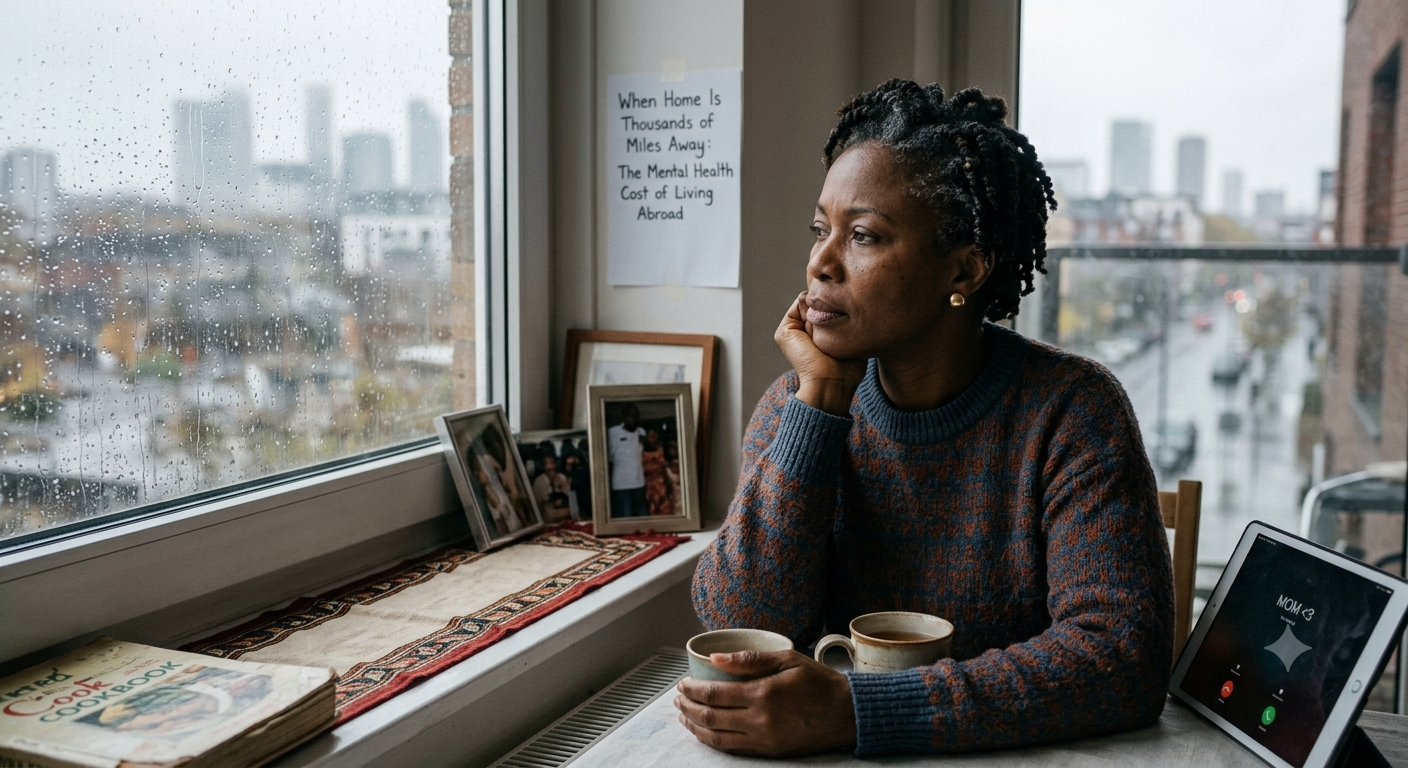
As an immigrant and mother of four, I have discovered that living abroad is not simply changing countries.
Sometimes it feels like learning how to survive while carrying two worlds in one heart.
Many immigrants also experience a unique form of emotional grief when they are separated from ageing parents, loved ones, and familiar places.
I explored this deeply in my article The Invisible Grief of Watching Your Parents Grow Older, because distance can make ordinary moments feel incredibly painful.
Some people believe moving abroad is the happy ending.
A better country. A better income. Better schools. Better opportunities.
Sometimes, those things are true.
But what many people never see is the invisible price many immigrants quietly pay every single day.
The mental health cost of living abroad rarely appears in family photos, social media updates, or cheerful video calls back home.
Behind the smiles are people carrying homesickness, loneliness, financial pressure, guilt, cultural adjustment, and the exhausting responsibility of trying to build a better future while missing the life they left behind.
The Culture Shock Nobody Can Fully Explain
People often prepare you for the weather.
They tell you about finding work.
They remind you to bring warm clothes.
What nobody prepares you for is how strange ordinary life can suddenly feel.
The language may be English, but conversations feel different.
The humour is different.
The food tastes unfamiliar.
The celebrations are different.
Even after months—or years—you may still feel like you’re standing slightly outside everyone else’s world.
Culture shock is not just about adjusting to a new country.
It can quietly affect your confidence, your relationships, your sense of identity, and your emotional wellbeing.
Missing the People Who Made Life Feel Safe
One of the hardest parts of living abroad is realising that the people you once depended on are no longer a short drive away.
Your parents grow older.
Your siblings celebrate birthdays.
Children are born.
Friends get married.
Loved ones become ill.
Sometimes funerals happen while you’re desperately refreshing airline prices you cannot afford.
The distance makes joy feel incomplete and grief even heavier.
You begin to understand that missing home isn’t only about missing a place.
It’s about missing people.
Raising Children Between Two Worlds
One of the greatest emotional challenges for immigrant parents is raising children who belong to two cultures.
You want them to embrace the opportunities of the country they now call home.
At the same time, you desperately hope they won’t lose the language, traditions, values, and stories that shaped you.
There are moments when you wonder whether they will ever truly understand the sacrifices made for their future.
As parents, we often carry that emotional weight silently. Sometimes this emotional exhaustion is connected to a wider pattern of always putting others first.
I wrote about this experience in When Home Doesn’t Feel Like Peace: The Silent Exhaustion of a Woman Who Is Always Trying to Please Everyone.
The Pressure to Keep Going
Many immigrants cannot simply stop.
Bills continue.
Rent must be paid.
Children need uniforms, food, and school supplies.
Families back home may also depend on financial support.
Even when you’re emotionally exhausted, you keep working.
Many continue caring for others while quietly neglecting their own wellbeing.
That emotional burden builds slowly until stress becomes anxiety, burnout, sleep problems, or depression.
According to the World Health Organization, mental health is an essential part of overall health and wellbeing. Yet many people delay seeking support because of stigma, cultural beliefs, or lack of awareness.
The Hidden Guilt Many Immigrants Carry
People back home often imagine life abroad is perfect.
They see photographs.
They hear about opportunities.
They assume success.
What they don’t see are the nights spent worrying about finances.
The loneliness.
The homesickness.
The tears after difficult workdays.
The guilt of missing important family moments.
Sometimes you feel guilty for leaving.
Sometimes you feel guilty because you cannot visit.
Sometimes you feel guilty because your children are growing up far away from their grandparents.
Guilt quietly becomes another invisible suitcase many immigrants carry.
When Loneliness Doesn’t Look Like Being Alone
Loneliness abroad is different.
You can work with dozens of people every day and still feel completely isolated.
You may have neighbours but no close friends.
You may attend community events yet still feel unseen.
Human beings need genuine connection.
Without it, emotional wellbeing can slowly decline.
That is why building meaningful relationships is just as important as earning a living.
Research from the Mental Health Foundation highlights how loneliness and isolation can have a significant impact on emotional wellbeing, making connection and community important parts of protecting mental health.
Protecting Your Mental Health While Living Abroad
Although the mental health cost of living abroad is real, there are healthy ways to protect yourself.
Stay Connected
Call family regularly.
Celebrate birthdays together online.
Keep traditions alive, even from a distance.
Build Your Own Community
Join local groups.
Attend cultural events.
Volunteer.
Connect with people who understand your journey.
Give Yourself Permission to Miss Home
Missing home does not mean you’ve failed.
It simply means you’ve loved deeply.
Allow yourself to acknowledge those emotions without guilt.
Prioritise Self-Care
Rest when possible.
Eat well.
Exercise regularly.
Spend time outdoors.
Small daily habits make a significant difference to emotional wellbeing.
For some people, self-care begins with simple things that bring comfort and familiarity.
I shared my own experience of finding emotional relief through music in When There Is Zero Energy for Self-Care: How ’80s and ’90s Music Saves My Sanity.
Seek Professional Help When Needed
If sadness, anxiety, or emotional exhaustion begin affecting daily life, speaking with a qualified mental health professional is a sign of strength—not weakness.
Immigrants who are struggling emotionally can also explore support resources through organisations such as Mind, which provides information and guidance about mental health challenges and available support.
You Are Allowed to Feel Both Gratitude and Grief
One of the biggest lessons I’ve learned is this:
You can be grateful for new opportunities…
…and still miss home every single day.
You can love your new country…
…while still longing for familiar streets, familiar voices, and familiar laughter.
Those feelings can exist together.
You do not have to choose one.
Living abroad teaches resilience.
It teaches courage.
But it also asks you to grieve quietly for the life you left behind.
That grief deserves compassion.
Final Thoughts
If you’re reading this from a country far away from where you were born, I hope you know you’re not alone.
Your homesickness is real.
Your sacrifices matter.
Your emotional struggles are valid.
The mental health cost of living abroad is often invisible, but that doesn’t make it any less significant.
Take care of your heart while you’re building a better future.
Because success means very little if you lose yourself along the way.
And if today feels particularly heavy, remember this:
Home is not only a place.
Sometimes, home is the people who carry your story.
Sometimes, home is the memories that keep you going.
And sometimes, home is the hope that one day, all the sacrifices will make sense.