
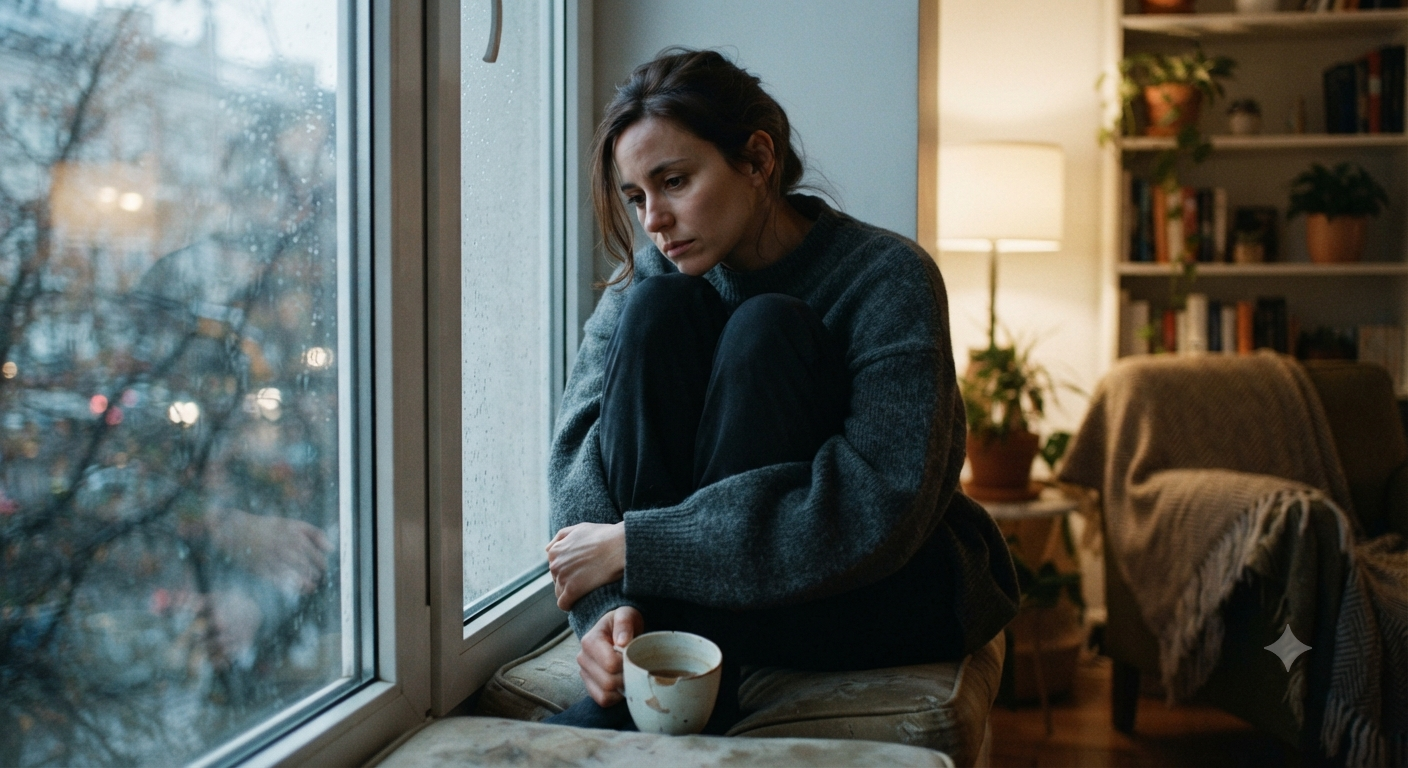
There was a time when she believed home would be the one place where she could finally rest.
The place where she could remove the weight of the outside world. The place where she did not have to perform, explain herself, or prove that she was enough.
But somewhere along the way, home became another place where she had to be careful.
She learned to read the mood of everyone around her before she entered a room. She noticed the silence before anyone spoke. She sensed disappointment before anyone expressed it. She adjusted her words, her needs, and even her emotions to keep everyone else comfortable.
She became the woman who remembered every birthday, solved every problem, carried every responsibility, and quietly swallowed every hurt.
To everyone else, she looked strong.
Reliable.
Selfless.
But deep inside, she was tired.
Not the tired that disappears after a good night’s sleep.
The kind of exhaustion that comes from constantly trying to be everything to everyone while slowly losing connection with yourself.
For many women, when home doesn’t feel like peace, it is not because they do not love their families. It is because they have spent so long pouring into everyone else that they have forgotten what it feels like to be cared for too.
The Hidden Burden of Being the Woman Everyone Depends On
Many women grow up receiving messages about what it means to be “good.”
A good daughter sacrifices.
A good wife understands.
A good mother puts her children first.
A good woman keeps the peace.
These values can create beautiful qualities such as compassion, responsibility, and kindness. But when taken to an unhealthy extreme, they can become a silent prison.
The woman who is always available can become invisible.
The woman who never complains can become unheard.
The woman who always says “I’m fine” can become disconnected from her own pain.
This experience is common across cultures.
In many African households, women are often raised with strong expectations around family responsibility, endurance, and sacrifice. In many Western societies, women may also face pressure to “have it all” — balancing careers, relationships, parenting, finances, and personal growth.
The details may look different, but the emotional weight can feel surprisingly similar:
“Everyone needs me, but who notices when I need someone?”
When Caregiving Becomes Emotional Exhaustion
Caring for others is a beautiful expression of love.
But constantly caring without receiving emotional support can slowly drain a person.
A woman may find herself:
- Always solving problems but rarely sharing her own struggles
- Apologising even when she has done nothing wrong
- Avoiding difficult conversations to prevent conflict
- Feeling guilty whenever she prioritises herself
- Measuring her worth by how useful she is to others
- Feeling lonely even when surrounded by family
This type of emotional exhaustion is often overlooked because there is no visible injury.
Nobody sees the mental load.
Nobody sees the constant planning, remembering, anticipating, and worrying.
Nobody sees the emotional labour involved in keeping a household running.
Research from organisations such as the World Health Organization (WHO) highlights the relationship between chronic stress and emotional wellbeing, showing why prolonged pressure can affect both mental and physical health.
The Woman Who Has Lost Herself While Trying to Keep Everyone Happy
One of the most painful parts of always pleasing others is that, over time, you may stop asking yourself important questions.
What do I need?
What makes me happy?
What do I enjoy?
Who am I outside of my responsibilities?
Many women know themselves through their roles:
Mother.
Partner.
Caregiver.
Employee.
Daughter.
Friend.
But underneath those roles is still a person with dreams, fears, interests, and emotional needs.
Sometimes the greatest loss is not losing a relationship.
It is losing yourself while trying to maintain one.
This is why emotional neglect can be so painful. It does not always happen through obvious cruelty. Sometimes it happens through years of being unseen.
You may also find this related discussion helpful:
5 Effective Strategies for Overcoming Emotional Neglect in Women
Signs That Home May Be Draining You Emotionally
1. You Feel More Like a Manager Than a Family Member
You organise, plan, remind, arrange, and solve.
Everyone depends on you.
But you rarely feel emotionally supported.
You may start feeling like your value comes from what you do rather than who you are.
2. You Cannot Fully Relax at Home
Home should ideally be a place where your nervous system can rest.
But when you constantly feel responsible for everyone’s emotions, relaxation becomes difficult.
You may find yourself thinking:
“Is everyone okay?”
“Did I upset someone?”
“What problem will I have to solve next?”
Living in a constant state of alertness can be emotionally exhausting.
3. You Hide Your Feelings to Avoid Burdening Others
Many women become experts at hiding pain.
They smile through sadness.
They continue working through exhaustion.
They say “nothing is wrong” because explaining feels harder than suffering quietly.
But unexpressed emotions do not disappear. They often find other ways to show up through anxiety, frustration, resentment, or emotional withdrawal.
4. You Feel Guilty When You Choose Yourself
Rest should not require permission.
Self-care should not feel selfish.
Yet many women experience guilt when they do something for themselves.
They feel uncomfortable spending time alone.
They struggle to say no.
They fear disappointing others.
But caring for yourself is not abandoning others.
It is recognising that you are also someone worth caring for.
Why Some Women Become People-Pleasers
People-pleasing often develops from a desire for acceptance, safety, or connection.
For some people, especially those who experienced criticism, emotional neglect, conflict, or unpredictable environments, keeping others happy may have become a way of protecting themselves.
The belief becomes:
“If everyone is happy with me, everything will be okay.”
But this comes at a cost.
You may gain approval from others while losing peace within yourself.
The goal is not to become uncaring.
The goal is to create healthier boundaries.
Learning to Make Home Feel Like Peace Again
Creating peace at home does not mean creating a perfect family.
Every home has disagreements, stress, responsibilities, and difficult seasons.
Peace comes from emotional safety.
It comes from being able to express yourself without fear.
It comes from knowing your feelings matter too.
Here are some gentle steps that can help:
1. Start Listening to Your Own Needs Again
Ask yourself:
“What have I been ignoring?”
“What emotions have I been carrying silently?”
“What do I need more of in my life?”
Your needs are not an inconvenience.
2. Stop Carrying Every Responsibility Alone
You do not have to be the only person holding everything together.
Allow others to contribute.
Ask for help.
Communicate your limits.
A healthy family is not built on one person’s exhaustion.
3. Create Small Moments That Belong Only to You
Self-care does not always need to be expensive or dramatic.
It can be:
- Listening to music that brings you joy
- Taking a quiet walk
- Reading a few pages of a book
- Journaling your thoughts
- Having uninterrupted time alone
Small moments of connection with yourself matter.
You may also enjoy:
When There Is Zero Energy for Self-Care: How 80s and 90s Music Saves My Sanity
4. Learn That Boundaries Are Not Rejection
A boundary is not saying:
“I don’t care about you.”
A boundary says:
“I care about you, but I also need to care about myself.”
Healthy relationships allow people to have needs, emotions, and limits.
When Love Exists But Peace Is Missing
Sometimes the hardest situations are not those where love is absent.
Sometimes love exists, but exhaustion has taken over.
A woman can love her family deeply and still feel overwhelmed.
She can appreciate her home and still need emotional support.
She can be grateful and still admit that something hurts.
Two things can be true at the same time.
Acknowledging your exhaustion does not mean you are ungrateful.
It means you are human.
You Deserve a Home Where You Can Exhale
The woman who spends her life making everyone comfortable deserves comfort too.
The woman who listens to everyone deserves to be heard.
The woman who carries everyone deserves moments where someone asks:
“Are you okay?”
Not because she has failed.
Not because she is weak.
But because she is a person with emotions, dreams, and limits.
If home doesn’t feel like peace, it may be time to gently ask yourself why.
Not with blame.
Not with shame.
But with compassion.
Because peace is not only something you create for others.
It is something you deserve to experience too.
Final Thoughts
Many women spend years trying to build a happy home while quietly suffering inside it.
They become experts at giving love but beginners at receiving it.
They create comfort for everyone else while forgetting that they also deserve comfort.
Your worth is not measured by how much you sacrifice.
Your value does not disappear when you rest.
And your voice matters, even in the place you call home.
A peaceful home is not one where nobody struggles.
It is one where everyone’s feelings matter — including yours.
If This Article Resonated With You
If you feel emotionally exhausted, unseen, or overwhelmed by always trying to please everyone, remember that healing often begins with acknowledging what you feel.
You may also want to read:
The Silent Grief of Staying in an Unhappy Marriage: The Pain Nobody Sees
Breakups, Grief & New Beginnings: Your Mental Health Toolkit
For professional mental health information and support resources, trusted organisations such as the World Health Organization (WHO) provide evidence-based information about mental wellbeing, stress management, and emotional health. You can also explore the NHS Every Mind Matters website for practical advice on managing stress, anxiety, low mood, and improving your mental wellbeing.