
Dearest gentle reader,
As a mental health advocate, I find myself thinking about you quite often.
Not in a strange, “I am watching you through your window” kind of way.
I simply think about the things that quietly creep into our everyday lives and begin affecting our wellbeing before we even realise what is happening.
And today, I want us to talk about one of them.
Your screen.
Yes, that innocent-looking little rectangle you are probably holding right now.
The same phone that wakes you up in the morning, keeps you connected to family, helps you find your way around a new city, lets you work from almost anywhere, entertains you when you’re bored and gives you access to practically the entire world.
Wonderful invention, isn’t it?
But sometimes I think our phones have become a little too wonderful.
They have found a way into almost every part of our lives.
We wake up and reach for them.
We eat while scrolling.
We work while checking notifications.
We watch television with our phones beside us.
We go to bed with them.
And, somehow, we can spend five minutes checking one thing online and suddenly realise that an entire hour has disappeared.
How did that happen?
You went online to check one message.
Then you watched a video.
Then you saw someone’s post.
Then you clicked another video.
Then somebody’s holiday pictures appeared.
Then you found yourself reading an argument between two complete strangers.
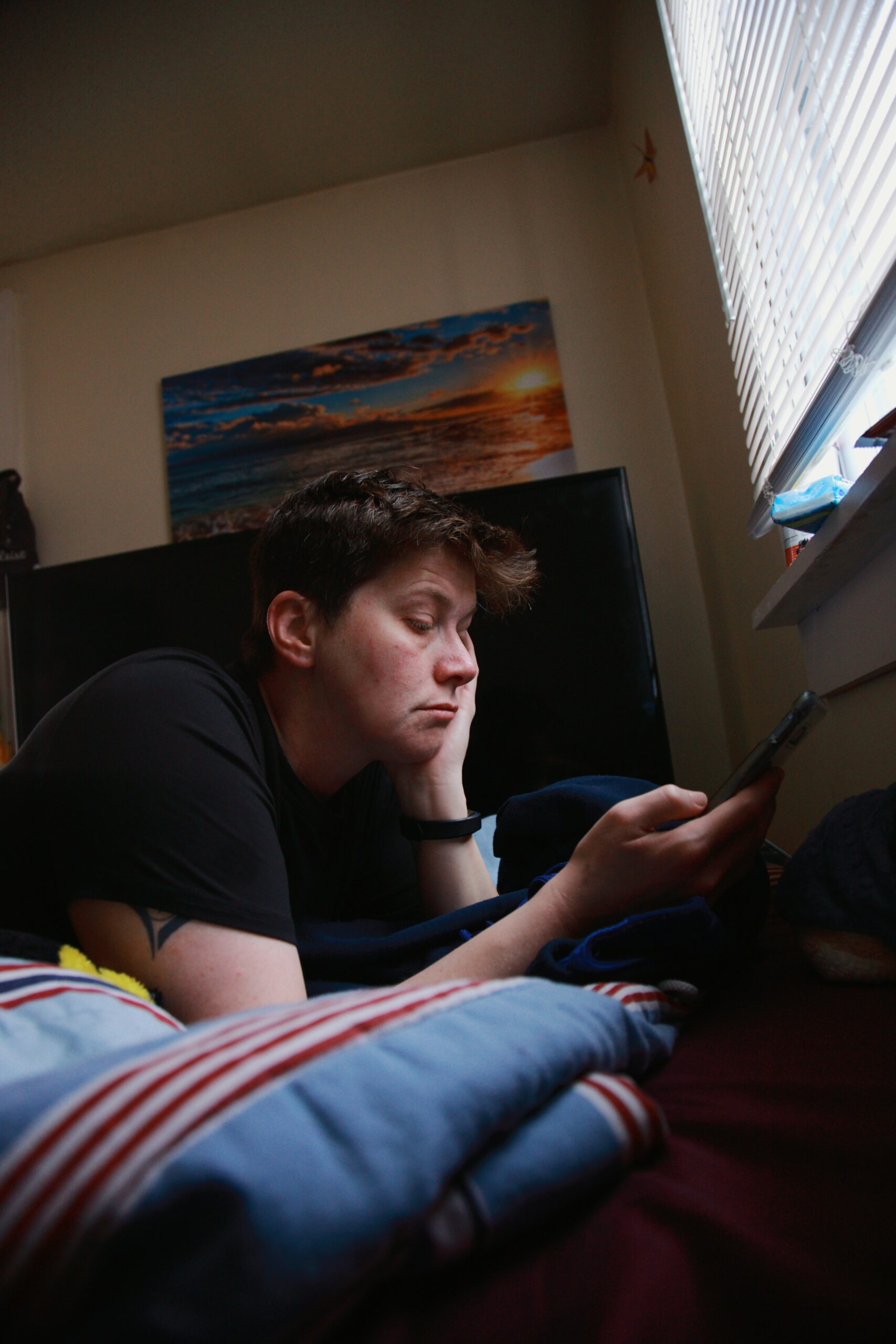
And before you know it, you’re lying in bed at midnight wondering why you are still awake.
I know I’m not the only one who has done this.
The problem isn’t that technology is bad.
Far from it.
Our phones and other digital devices can make life easier, help us maintain relationships, give us access to useful information and provide entertainment when we need it.
The problem is what happens when we stop using technology intentionally and start allowing it to use us.
When your phone becomes part of your emotional life
Have you ever had one of those days when your mind already feels full, but you continue scrolling anyway?
Perhaps work has been stressful.
Maybe the children have been demanding your attention all day.
Perhaps you’ve had a difficult conversation with someone.
Maybe you’re worried about money, relationships, family, your future or simply the fact that life seems to be moving much faster than you can keep up with.
You finally sit down.
You pick up your phone.
And instead of giving your mind a genuine opportunity to rest, you feed it more information.
More opinions.
More news.
More people’s problems.
More arguments.
More advertisements.
More things to compare your life with.
Sometimes, what we call relaxing is actually just replacing one form of mental stimulation with another.
And eventually, your brain may begin to feel like a room where everybody is talking at the same time.
That feeling of having too much going on in your head is something I wrote about in my article, When You’re Emotionally Drained but Life Doesn’t Stop: How to Keep Going Without Burning Out.
Because emotional exhaustion doesn’t always arrive dramatically.
Sometimes it looks like sitting quietly with your phone in your hand while your mind is screaming, “I need a break.”
So, can too much screen time affect your mental well-being?
It can.
The relationship between screen use and mental wellbeing is complicated, and not every minute spent on a screen is harmful.
What matters is how, why and when we are using our devices.
For example, spending an evening video-calling someone you love is very different from spending three hours comparing your life with strangers online.
Using your phone to learn something useful is different from endlessly scrolling because you don’t know what else to do.
And watching your favourite programme for an hour is not the same as lying awake until 2 a.m. because you cannot stop scrolling.
The problem often begins when screen use starts interfering with things that help us feel well—such as sleep, movement, real-life relationships, concentration, quiet time and simply being present.
The emotional exhaustion of constantly being connected
One of the strangest things about modern life is that we are rarely completely disconnected.
There is always another notification.
Another email.
Another WhatsApp message.
Another headline.
Another social media post.
Another person needing an answer.
And because our phones are always within reach, we can start feeling as though we should always be available too.
You may tell yourself:
“I’ll just check quickly.”
But that quick check can turn into twenty minutes.
And then another twenty.
And eventually, your mind hasn’t had a proper pause all day.
Even when you’re physically resting, your brain may still be processing information.
This is particularly noticeable when we consume upsetting or negative content repeatedly.
The Mental Health Foundation has highlighted how constant exposure to distressing online content can contribute to feelings of overwhelm, anxiety and emotional exhaustion. It also recommends practical steps such as setting limits, switching off notifications and creating phone-free spaces.
In other words, sometimes the kindest thing you can do for your mind is stop feeding it information for a while.
Your sleep may be paying the price
Now let’s talk about something many of us probably know too well.
The midnight scroll.
You tell yourself you’re only going to check your phone for a few minutes before sleeping.
Suddenly you’re watching a video.
Then another.
Then you remember something you wanted to search for.
Then somebody sends you a message.
Then you start reading the comments.
And suddenly your alarm is going to ring in a few hours.
Your phone may not be the only reason you’re struggling to sleep—stress, anxiety, work patterns and many other factors can contribute to sleep problems.
But if your phone has become the last thing you look at before sleeping and the first thing you reach for in the morning, it may be worth asking yourself whether your bedtime routine needs a little attention.
The NHS notes that sleep problems can leave people feeling tired and irritable during the day and can make concentration more difficult. It also recommends paying attention to healthy sleeping habits.
Sometimes, therefore, a digital detox isn’t about dramatically throwing your phone into a drawer for an entire week.
It might simply mean giving yourself permission to sleep without the internet accompanying you to bed.
And then there is comparison…
Oh, comparison.
That old troublemaker.
Social media can make it incredibly easy to look at someone else’s life and feel as though yours isn’t moving quickly enough.
Someone has bought a house.
Someone is travelling.
Someone has started a business.
Someone looks fantastic at 45.
Someone’s children are graduating.
Someone has just celebrated an anniversary.
Someone is apparently living their best life every single Tuesday.
And you’re sitting there wondering:
“What exactly am I doing with my life?”
But please remember something.
You are usually comparing your ordinary Tuesday with somebody else’s carefully selected highlight reel.
You don’t see the argument that happened before the photograph.
You don’t see the anxiety behind the smile.
You don’t see the bills.
You don’t see the sleepless nights.
You don’t see the disappointment.
You don’t see the things they haven’t posted.
So please be careful about allowing a screen to convince you that everybody else has figured life out except you.
You don’t have to disappear from the internet
Now, before anybody panics, I am not suggesting that we all become modern-day hermits.
I am a writer.
I use the internet.
I use social media.
I communicate with people online.
I read.
I research.
I write.
I enjoy watching videos.
And yes, I occasionally scroll for absolutely no productive reason whatsoever.
A digital detox doesn’t necessarily mean abandoning technology.
It can simply mean becoming more intentional about how you use it.
The Mental Health Foundation also recognises that being online can have positive uses, including helping people access information, connect with others and find mental health support. The important thing is finding a healthy balance between online and offline life.
So perhaps the question isn’t:
“How do I stop using my phone?”
Maybe the better question is:
“How can I use my phone without allowing it to take over my life?”
How to begin your own digital detox
You don’t need to make this complicated.
Start small.
1. Stop taking your phone everywhere
Do you really need your phone beside you while you’re eating?
Does it need to sit beside you while you’re having a conversation with someone?
Does it need to come into the bathroom?
I’ll leave that one between you and your conscience.
Sometimes creating small phone-free moments is enough to remind us that we can exist without checking a screen every few minutes.
2. Turn off unnecessary notifications
Not every notification deserves immediate access to your attention.
You don’t have to know every time somebody likes a post.
You don’t have to respond to every message the second it arrives.
You are allowed to have a life that isn’t interrupted by your phone every five minutes.
Turn off the notifications that don’t genuinely need your attention.
Your mind may thank you for the silence.
3. Create a screen-free bedtime
Try putting your phone away before you go to sleep.
Perhaps start with thirty minutes.
If that feels manageable, extend it.
Read a book.
Listen to music.
Have a cup of tea.
Write in a journal.
Talk to someone.
Or simply lie down and allow your mind to be quiet.
You don’t always have to fill every empty moment.
4. Give yourself a morning before you give yourself the internet
This one can be difficult.
You wake up.
Your hand reaches for your phone.
And before your feet have even touched the floor, you’ve already consumed messages, news, social media updates and other people’s opinions.
What if you gave yourself the first thirty minutes of your day instead?
Open the curtains.
Drink some water.
Stretch.
Pray or reflect.
Make your breakfast.
Look outside.
Talk to your family.
Let your thoughts arrive before everybody else’s thoughts invade them.
5. Be honest about what you are consuming
Not all screen time is equal.
Ask yourself:
How do I feel after using this app?
Do you feel informed?
Inspired?
Connected?
Entertained?
Or do you regularly feel anxious, inadequate, angry, overwhelmed or emotionally drained?
That question alone can tell you a lot.
If a particular account or type of content repeatedly leaves you feeling worse, you are allowed to unfollow, mute, block or step away.
Protecting your peace is not being dramatic.
6. Replace some screen time with real life
This is perhaps the most important part.
You can’t simply remove something from your life without deciding what you want to put in its place.
Go for a walk.
Call a friend.
Cook something.
Listen to music.
Read.
Sit outside.
Spend time with your children.
Have a proper conversation with your partner.
Visit someone.
Do absolutely nothing for ten minutes.
There is something beautiful about allowing yourself to experience life without documenting it.
You don’t have to photograph every meal.
You don’t have to post every achievement.
You don’t have to tell the internet where you are every five minutes.
Some moments are allowed to belong entirely to you.
A little digital detox challenge for you
Let’s make this simple.
For the next seven days, choose one small digital boundary.
Maybe you won’t use social media for the first thirty minutes after waking up.
Maybe your phone won’t come to bed with you.
Maybe you’ll have one screen-free meal every day.
Maybe you’ll turn off unnecessary notifications.
Maybe you’ll spend one evening without social media.
Don’t try to become a completely different person overnight.
Just become a little more intentional.
Then pay attention to how you feel.
Are you sleeping better?
Do you feel less distracted?
Are you more present with the people around you?
Does your mind feel a little quieter?
Do you find yourself reaching for your phone less often?
Sometimes the changes we need aren’t dramatic.
Sometimes they are simply small acts of reclaiming our attention.
Your phone is a tool. Don’t let it become your master.
Technology isn’t the enemy.
Your phone isn’t the enemy.
Social media isn’t automatically the enemy either.
But anything that occupies too much of our attention deserves a closer look.
Because your attention is valuable.
Your time is valuable.
Your peace is valuable.
And your mental well-being is certainly worth protecting.
So tonight, perhaps before you climb into bed, ask yourself one simple question:
“Do I really need to take the whole internet with me to bed?”
Maybe the answer will be yes.
Maybe you’ll laugh and keep scrolling.
Or maybe, just maybe, you’ll put the phone down.
And rediscover what it feels like to sit quietly with your own thoughts.
Sometimes, unplugging isn’t about disconnecting from the world.
It is about reconnecting with yourself.
And I think we could all use a little more of that.