
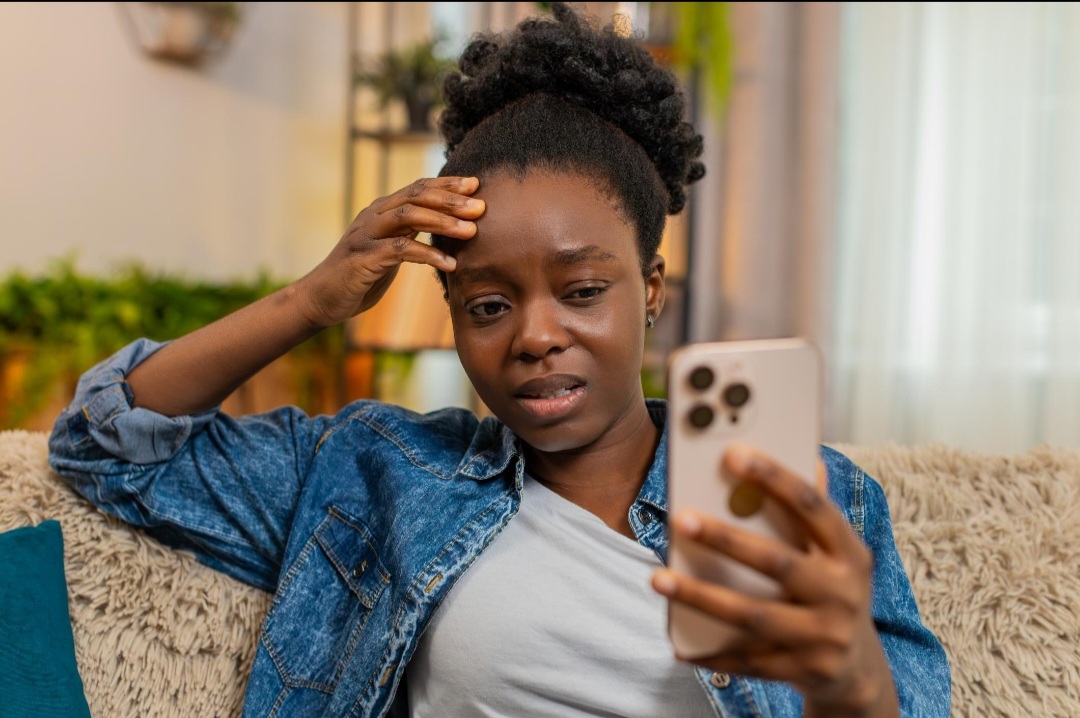
There is something strange about putting yourself on the internet.
One minute, you are sitting quietly somewhere, minding your business, writing something you believe in, sharing a photograph, posting your work, celebrating a small achievement, or simply expressing an opinion.
Then suddenly, strangers have opinions about you.
And sometimes, those opinions are not kind.
I know this because I have experienced it myself.
Some time ago, I shared a blog post in a Facebook group. I wasn’t looking for trouble. I wasn’t attacking anybody. I was simply sharing something I had written.
But what followed was an attack.
If you have ever been on the receiving end of an unexpected online pile-on, you will understand what I mean when I say words on a screen can still hurt.
You can tell yourself, They are just strangers.
You can tell yourself, Why should I care what they think?
You can even put your phone down and walk away.
But sometimes, their words follow you.
You replay what was said.
You wonder why somebody who doesn’t know you felt so comfortable speaking to you that way.
You begin questioning yourself.
Did I say something wrong?
Should I have kept quiet?
Maybe I shouldn’t have shared that.
And sometimes, the most painful part isn’t even what they said.
It is what their behaviour makes you feel about being visible.
The internet can be a beautiful place — until it isn’t
I love what social media can do.
It has allowed ordinary people to find communities they may never have found in real life.
It has given writers a voice.
Artists have found audiences.
Small businesses have found customers.
People who once felt invisible have discovered that there are others who understand them.
Someone can sit in a bedroom in Manchester and connect with somebody thousands of miles away.
A woman who feels completely alone can discover that she isn’t the only person struggling with something.
Someone starting over in a new country can find people who understand the complicated emotions of leaving home.
There is beauty in that.
But there is another side to social media that we don’t always talk about.
The same platform that allows people to celebrate you can also give someone a front-row seat to your life — and some people will use that seat to throw stones.
Why does someone else’s happiness bother people so much?
This is something I have often wondered about.
Why do some people struggle to see another person doing well?
Why does somebody else’s confidence irritate them?
Why does another person’s beautiful photograph, new job, growing business, successful marriage, holiday, achievement, or personal growth sometimes provoke such hostility?
I am not saying every unpleasant comment comes from jealousy.
Sometimes people simply disagree.
And disagreement is perfectly normal.
We do not have to agree with everything somebody posts online.
But disagreement and cruelty are not the same thing.
You can disagree without humiliating someone.
You can challenge an opinion without attacking the person behind it.
You can scroll past something you don’t like.
You can simply say nothing.
Yet some people choose to drag others instead.
And because social media gives people an audience, one nasty comment can quickly become ten.
Ten can become fifty.
Suddenly, someone who woke up that morning feeling perfectly fine is sitting alone with their phone, reading hundreds of comments about themselves.
That can be incredibly overwhelming.
Sometimes the bullying isn’t obvious
When we hear the word cyberbullying, we may imagine someone receiving direct threats or being relentlessly harassed online.
And yes, those things happen.
But online cruelty can take many forms.
It can look like:
- Repeatedly insulting someone’s appearance or character.
- Mocking someone’s work.
- Deliberately embarrassing someone publicly.
- Spreading rumours.
- Sharing someone’s private information.
- Creating fake accounts to impersonate or attack them.
- Excluding someone deliberately from online communities.
- Encouraging other people to attack them.
- Constantly leaving nasty comments under their posts.
- Turning someone’s vulnerability into entertainment.
- Deliberately provoking someone because they know it will get a reaction.
Sometimes it is one person.
Sometimes it becomes a crowd.
And sometimes, the person doing the damage convinces themselves that it is only a joke.
But if someone is repeatedly being humiliated, intimidated, or targeted, telling them to just ignore it does not magically make the emotional impact disappear.
The Mental Health Foundation also highlights how online abuse can affect people wherever they are, because unlike many forms of face-to-face bullying, online harassment can follow someone into spaces that would normally feel safe.
There is a person behind that profile picture
This is something I wish we would remember more often.
Behind every account is a human being.
The person you are insulting may have had a difficult day.
They may already be struggling with their confidence.
They may be dealing with grief.
They may be going through a difficult relationship.
They may be trying to rebuild themselves after moving to another country.
They may have spent years learning to believe in themselves.
You don’t know.
You see a photograph.
You see a post.
You see a comment.
You see a few seconds of somebody’s life.
You don’t see the entire person.
And that should make us a little more careful with our words.
The mental health cost of being constantly attacked online
Being repeatedly targeted online can affect how a person feels about themselves and the world around them.
They may become anxious about posting.
They may start checking their notifications repeatedly.
They may become afraid of what people will say next.
They may stop sharing their opinions.
They may delete photographs.
They may deactivate their account.
They may stop creating altogether.
And perhaps the saddest part is that they may begin shrinking themselves to avoid becoming someone’s next target.
I have seen people disappear from social media because they simply became tired of being exposed to unnecessary cruelty.
And I understand why.
Sometimes leaving feels easier than constantly defending yourself.
But imagine having something you genuinely love doing and slowly giving it up because strangers have convinced you that being visible is too dangerous.
That is the part that concerns me.
The Mental Health Foundation’s guidance on cyberbullying and online abuse also highlights the connection between online abuse and mental health, including anxiety, stress, low self-esteem, shame, loneliness, and feeling overwhelmed.
You don’t have to prove yourself to people determined to misunderstand you
One of the biggest lessons I have had to learn about being online is that you cannot explain yourself to everybody.
You can write the perfect explanation.
You can respond politely.
You can provide evidence.
You can clarify your intentions.
You can explain what you meant.
And somebody who has already decided to misunderstand you may still misunderstand you.
At some point, you have to ask yourself:
Why am I exhausting myself trying to convince someone who has already decided what they want to believe about me?
Not every comment deserves a response.
Not every accusation requires a defence.
Not every stranger deserves access to your emotional energy.
If you are someone who finds yourself constantly explaining yourself, especially when people have already made up their minds about you, you may also want to read Why Do I Keep Explaining Myself
And blocking someone is not weakness.
Sometimes blocking is simply a boundary.
Put the phone down before you respond
This one matters.
When somebody says something cruel to you online, your first instinct may be to respond immediately.
I understand.
You want to defend yourself.
You want them to know they have crossed a line.
You want to correct the story.
You want to give them a piece of your mind.
But pause.
Put the phone down.
Take a breath.
Walk away.
Make a cup of tea.
Talk to someone you trust.
Come back when your emotions have settled.
Because sometimes the response we write while angry is not the response we would choose when we are calm.
And remember something else:
You do not have to respond simply because somebody has spoken to you.
Silence can be a boundary too.
Keep evidence when the behaviour crosses a line
If somebody is repeatedly harassing, threatening, or targeting you online, don’t rely on your memory.
Take screenshots.
Keep records of messages and posts.
Save relevant information before it disappears.
Use the platform’s reporting tools.
Block the person if necessary.
The Mental Health Foundation similarly recommends saving evidence, using blocking or muting tools, reporting abusive content, and reviewing privacy settings when dealing with online harassment.
And if the behaviour involves serious threats, stalking, intimate images, personal information being exposed, or anything that makes you feel unsafe, don’t carry it alone.
Tell someone you trust and consider getting appropriate professional or legal support.
There is a difference between somebody making one unpleasant comment and a sustained campaign of harassment.
Know the difference.
And take your safety seriously.
Protect your peace after the incident
This is something people often overlook.
You may block the person and think the situation is over.
But your mind may still be processing what happened.
You may find yourself checking your phone.
You may wonder whether they have posted something else.
You may keep replaying the conversation.
You may even begin anticipating another attack.
Permit yourself to step away.
You don’t have to remain online just because everybody else is.
Take a social media break.
Turn off notifications.
Limit how often you check your accounts.
Spend time with people who make you feel safe.
Go outside.
Listen to music.
Read.
Pray if that brings you comfort.
Do something that reminds you that your entire life is not happening inside a screen.
Because it isn’t.
You don’t have to keep everybody happy online
There is another uncomfortable truth about being visible online.
Sometimes, our fear of being disliked makes us tolerate far too much.
We keep explaining.
We keep defending.
We keep replying.
We keep trying to prove that we are good people.
We worry about what people will think if we block them.
We worry that setting a boundary will make us look rude.
We worry that somebody will call us arrogant for protecting our peace.
But you are allowed to decide what kind of behaviour you will tolerate.
You are allowed to mute.
You are allowed to block.
You are allowed to leave a conversation.
You are allowed to stop responding.
You are allowed to protect your emotional space.
And if you struggle with putting other people’s feelings before your own, my piece on people-pleasing and setting boundaries may speak directly to you.
Because boundaries don’t stop being important simply because the conversation is happening online.
And if you have been bullied online, please don’t let somebody else’s bitterness become your identity
This is the part I really want you to remember.
Someone else’s cruelty does not become the truth about you simply because they typed it confidently.
Someone calling you stupid does not make you stupid.
Someone mocking your appearance does not determine your beauty.
Someone saying your work is worthless does not erase the hours, creativity, and courage you put into creating it.
Someone being uncomfortable with your success does not mean you should become smaller.
And somebody else’s inability to celebrate you does not mean you have done something wrong by growing.
There will always be people who don’t like what you do.
There will always be people who misunderstand you.
There will always be someone who thinks your confidence is arrogance, your boundaries are rudeness, your happiness is showing off, or your success is undeserved.
You cannot control that.
What you can control is how much access you give those people to you.
You are allowed to remain visible
Perhaps this is the most important thing I want to say.
Don’t let cruel people convince you that you need to disappear.
If you enjoy writing, write.
If you enjoy creating, create.
If you have something meaningful to say, say it.
If you are building a business, build it.
If you are sharing your story because you know someone else needs to hear it, keep sharing.
You don’t have to become fearless.
You just need to become wiser about who gets access to you.
Your social media account is a doorway.
You don’t have to open that door to everybody.
Some people deserve your attention.
Some deserve your conversation.
Some deserve your kindness.
And some simply need to be blocked.
There is no prize for allowing someone to repeatedly disturb your peace.
So, yes, let’s talk about cyberbullying.
Let’s talk about online harassment.
Let’s talk about the mental health consequences of being constantly criticised, mocked, attacked or humiliated online.
But let’s also talk about something else:
the responsibility we all have for the kind of internet we are creating.
Before you press send, remember that there is a person on the other side of that screen.
You don’t know what they are carrying.
You don’t know what they have survived.
You don’t know how hard they worked to find the courage to show up online in the first place.
You don’t have to like everyone.
You don’t have to agree with everyone.
You don’t even have to engage with everyone.
Sometimes, the kindest thing you can do is keep scrolling.
And if someone is determined to make your online space unbearable?
Block them.
Protect your peace.
Keep creating.
Don’t let somebody else’s bitterness silence your voice.