
There was a time when connecting with someone meant sitting across from them, picking up the phone, writing a letter, or perhaps waiting patiently for a visit.
Today, connection can happen within seconds.
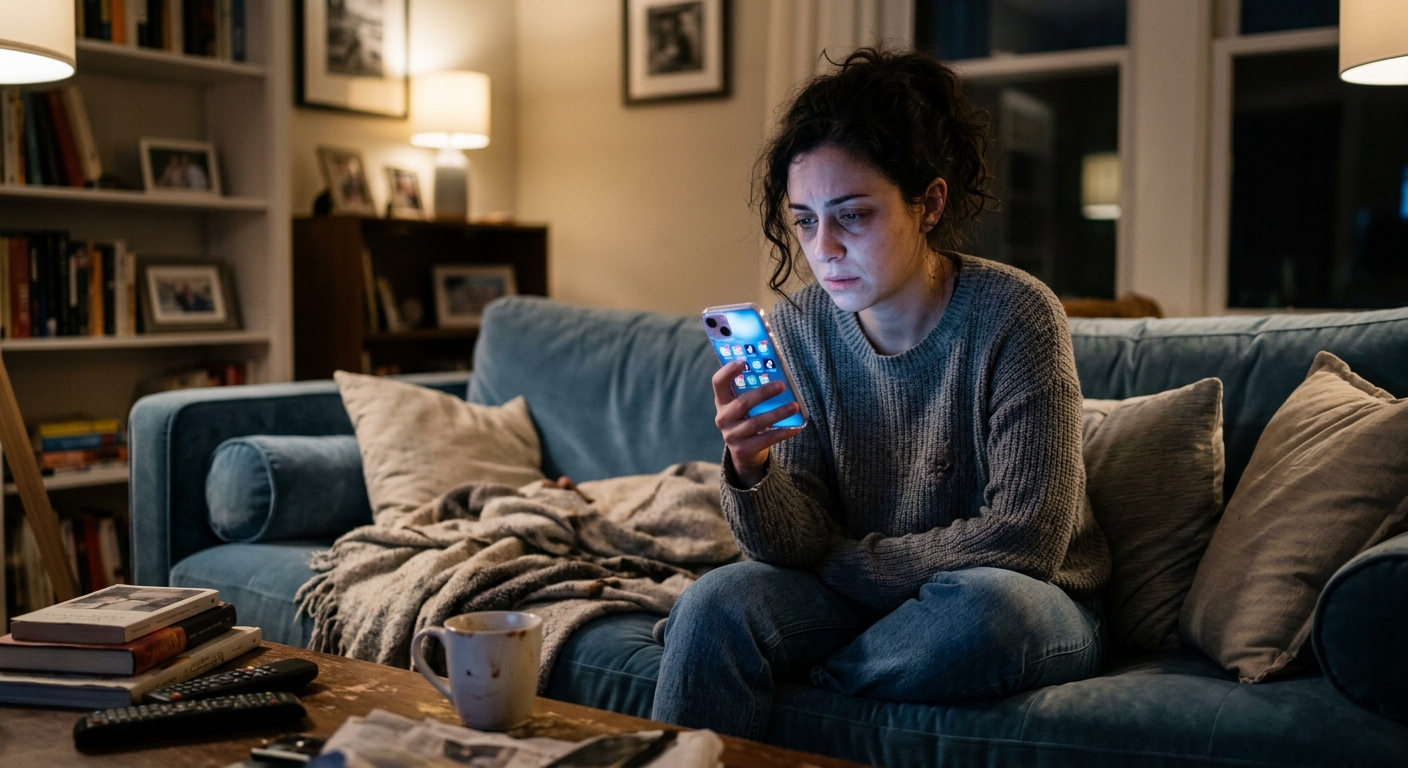
We wake up and reach for our phones. We check messages, scroll through Facebook or Instagram, watch videos, read opinions, admire someone’s holiday, celebrate someone’s success, and sometimes quietly wonder why our own lives don’t look quite as beautiful.
I know this feeling.
As someone who writes about mental health, relationships, emotions, and the complicated experiences that shape us, I have become increasingly aware of how closely our digital lives can become intertwined with our emotional lives.
Social media can make us feel connected when we are lonely. It can introduce us to people who understand experiences we once thought we were facing alone. It can give a voice to people who have struggled to be heard.
But it can also leave us emotionally exhausted.
Sometimes, the very place we go looking for connection can become the place where our peace begins to disappear.
And that is what makes the relationship between social media and mental health so complicated.
Social Media Is Not the Enemy
Before we talk about the darker side of social media, I think it is important to say this:
Social media itself is not inherently bad.
It is a tool.
And like many tools, its impact depends largely on how we use it, what we consume, who we interact with, and how much space we allow it to occupy in our lives.
For many people, social media has been a lifeline.
For someone living far away from family, it can make distance feel smaller.
For someone experiencing loneliness, it can provide companionship.
For someone struggling with a mental-health challenge, it can offer access to communities where people say, “I understand. I’ve been there too.”
And for people like me who write about mental health, social media can become a way of reaching someone who desperately needs to know that they are not alone.
That side of social media deserves to be acknowledged.
The NHS also recognises that technology can help people maintain connections, particularly when loved ones live far away, while encouraging us not to rely on social media alone to build relationships.
But there is another side we cannot ignore.
When Connection Becomes Comparison
One of the most difficult things about social media is that we rarely see people’s entire lives.
We see the birthday celebration, not the argument that happened before the photographs were taken.
We see the promotion, not the years of rejection that came before it.
We see the beautiful family photograph, not the struggles happening behind closed doors.
We see someone’s new home, holiday, relationship, business, body transformation or seemingly perfect life—and then we look at our own.
Without even realising it, comparison begins.
“Why am I not there yet?”
“What am I doing wrong?”
“Everyone seems to be moving forward except me.”
This is where social media can quietly affect our self-esteem.
The problem isn’t necessarily that other people are happy.
The problem is that we can begin comparing our complete reality with someone else’s carefully selected highlights.
And that is an unfair comparison.
The NHS similarly warns that because people often share the good things happening in their lives online, comparing ourselves with those carefully presented moments can make us feel lonelier.
If you’ve ever struggled with loneliness after moving somewhere new, you may also want to read my piece on Making Friends as an Adult After Moving Abroad.
Because sometimes what we need isn’t another person’s highlight reel.
We need genuine human connection.
The Pressure to Keep Up
Social media can create an invisible pressure to participate.
You may feel that you need to post.
You need to respond.
You need to stay updated.
You need to know what everyone is talking about.
You need to look successful.
You need to prove that you are happy.
And sometimes, you may even feel pressure to turn your private experiences into public content.
But you don’t have to.
You are allowed to have a life that does not need to be documented.
You are allowed to experience something beautiful without photographing it.
You are allowed to take a break without explaining why.
You are allowed to disappear from social media for a while and simply live.
Your life does not become less meaningful because you did not post it.
And if you’ve ever felt that you have to constantly appear strong, successful or “put together,” you may find my article The Pressure to Have It All Together: When Being Strong Becomes Exhausting worth reading.
Because sometimes the pressure we feel online is simply another version of the pressure we already carry inside.
The Validation Trap
There is another subtle danger: validation.
A post receives hundreds of likes, and we feel good.
A post receives very little attention, and suddenly we wonder whether people care.
Someone comments something kind and our mood lifts.
Someone criticises us, and we carry those words around for hours—or even days.
When our emotional state becomes too dependent on reactions from strangers, followers, or even people we know personally, social media begins to have more power over us than it should.
Your worth cannot be measured by engagement.
Not by likes.
Not by shares.
Not by followers.
Not by views.
Not by comments.
And certainly not by whether someone chose to interact with your post.
You were valuable before anyone pressed a button.
Sometimes, our desire for validation online is connected to a much deeper desire to be understood. I explored that feeling in Why Do I Keep Explaining Myself? When You Feel the Need to Be Understood by Everyone.
You don’t have to keep explaining yourself to earn your worth.
When Social Media Becomes Emotionally Exhausting
Have you ever picked up your phone intending to spend five minutes online and suddenly realised that an hour has passed?
You are not necessarily weak or lacking discipline.
Many social platforms are designed to keep us engaged.
One video leads to another.
One post leads to another.
One notification leads us back into the app.
Before long, our minds have consumed hundreds of pieces of information without having had a chance to properly process any of them.
And sometimes what we consume isn’t even nourishing.
Arguments.
Bad news.
Celebrity drama.
Other people’s achievements.
Political debates.
Disturbing stories.
Unsolicited opinions.
Endless negativity.
Our minds may be physically sitting on the sofa while emotionally travelling through hundreds of other people’s lives.
No wonder we sometimes feel exhausted.
The important question isn’t only how much time we spend online.
It is also what that time is doing to us.
Cyberbullying: When Words Become Weapons
There is also a much more serious side to social media: harassment and cyberbullying.
Behind a screen, some people say things they would never have the courage to say face-to-face.
Cruel comments can be written in seconds.
But the person reading them may carry those words for years.
Cyberbullying and online harassment can become serious sources of emotional distress, particularly for young people. The U.S. Surgeon General’s current guidance on social media and youth mental health highlights cyberbullying, harmful content, social comparison and other online risks while also recognising that social media can provide meaningful connection and support.
And because online interactions can follow someone everywhere through their phone, the victim may feel as though there is nowhere to escape.
If you have ever been the target of online cruelty, please remember this:
Someone else’s decision to be cruel does not define your worth.
Protecting your mental health may mean blocking, muting, reporting or walking away.
That isn’t weakness.
Sometimes, leaving the conversation is an act of self-respect.
But Social Media Can Also Be a Place of Healing
I don’t want this article to make social media sound like something we must fear.
There is beauty here too.
I have seen how online spaces can bring people together around experiences that were once hidden by shame and silence.
Someone struggling with grief can find others who understand.
A person dealing with loneliness can discover a supportive community.
Someone experiencing emotional abuse can read another person’s story and finally recognise what is happening in their own life.
Mental-health awareness has also grown tremendously through online conversations.
People who once whispered about depression, anxiety, trauma or emotional struggles are increasingly finding the courage to speak openly.
Sometimes, a single post can make someone feel seen.
Sometimes, a single sentence can make someone decide to seek help.
Sometimes, knowing that another human being understands is enough to get someone through another difficult day.
That matters.
This is why I don’t believe the answer is necessarily to throw our phones away and disappear from the digital world.
The goal is to build a healthier relationship with it.
So, How Do We Protect Our Peace Online?
We don’t necessarily need to delete every social media app.
We may simply need to become more intentional about the way we use them.
1. Notice How You Feel After Scrolling
This is one of the simplest questions you can ask yourself:
“How do I feel after spending time here?”
Do you feel inspired?
Connected?
Informed?
Encouraged?
Or do you feel inadequate, angry, anxious, lonely or emotionally drained?
Your emotional response is information.
Pay attention to it.
2. Curate Your Digital Environment
You curate your physical environment.
You decide what enters your home.
You can do the same with your digital environment.
Unfollow accounts that constantly make you feel inadequate.
Mute people whose content repeatedly disturbs your peace.
Leave online spaces that are toxic.
Follow people who educate, encourage, inspire, and make you think.
Your feed should not feel like an emotional battlefield.
3. Stop Comparing Your Behind-the-Scenes to Someone Else’s Highlights
When comparison begins, remind yourself:
“I am seeing a moment, not the whole story.”
You don’t know what happens when the camera is turned off.
You don’t know what someone is struggling with privately.
You don’t know the price they paid for what you are seeing.
And they don’t know yours.
Stay in your lane.
Your journey is still valid.
4. Create Phone-Free Moments
Give your mind somewhere to rest.
Have meals without scrolling.
Take a walk without constantly checking notifications.
Spend time with the people physically present with you.
Read a book.
Listen to music.
Sit quietly.
Look out of the window.
Let yourself experience moments without immediately turning them into content.
Sometimes, peace begins where the notifications end.
The NHS recommends nurturing real-world relationships and using technology as a way to stay connected rather than allowing it to become the only way we connect.
5. Don’t Let Your Phone Become Your Emotional First Responder
When something upsetting happens, our instinct can be to reach for our phones.
We search.
We scroll.
We post.
We look for reassurance.
We read other people’s opinions.
But sometimes what we actually need isn’t another opinion.
We need to breathe.
We need silence.
We need a conversation with someone we trust.
We need sleep.
We need to cry.
We need prayer.
We need professional support.
Or perhaps we simply need time.
Not every emotion needs to be processed online.
Give Yourself Permission to Log Off
Perhaps one of the healthiest things we can learn in the digital age is that we are allowed to disconnect.
You don’t owe social media your attention every hour of the day.
You don’t have to respond immediately.
You don’t have to explain your absence.
You don’t have to keep up with everyone.
And you certainly don’t have to sacrifice your mental health just to remain visible.
There will always be another post.
Another trend.
Another argument.
Another notification.
Another video.
But your peace is not replaceable.
The Question I Want You to Ask Yourself
Instead of asking:
“How much time am I spending on social media?”
perhaps we should sometimes ask:
“What is social media doing to my mind?”
Because two people can spend the same amount of time online and have completely different experiences.
One person may leave feeling connected and inspired.
Another may leave feeling inadequate and emotionally depleted.
It isn’t always about the number of minutes.
Sometimes, it is about what those minutes are doing to us.
The Surgeon General’s guidance makes a similar point in a different way: the impact of social media can vary depending on the person, the content and how the technology is being used.
So perhaps the goal isn’t perfection.
Perhaps the goal is awareness.
Final Thoughts: Protect Your Peace
Social media has changed the way we communicate, build relationships, discover information, and understand the world.
It has given us connection on a scale previous generations could never have imagined.
But connection should not come at the cost of our emotional well-being.
We can enjoy social media without allowing it to define us.
We can stay connected without constantly comparing.
We can participate without performing.
We can share without oversharing.
We can scroll without losing ourselves.
And we can log off whenever we need to.
As I continue navigating my own relationship with the digital world, one thing has become increasingly clear to me:
Not everything that demands our attention deserves our energy.
Sometimes, protecting your mental health means putting the phone down, stepping away from the noise, and returning to yourself.
Because the world will keep scrolling.
The notifications will keep coming.
But your mind deserves a place where it can finally be still.
A Gentle Reminder
If social media is affecting your mood, sleep, relationships, self-esteem or daily life in a way that feels difficult to manage, you don’t have to figure it out alone.
Talking to someone you trust or seeking professional support can be an important step.
And remember: taking care of your mental health isn’t something you need to apologise for.
Your peace matters too.




Please let me know if you’re looking for a writer for your site. You have some really great articles and I believe I would be a good asset. If you ever want to take some of the load off, I’d really like to write some articles for your blog in exchange for a link back to mine. Please shoot me an email if interested. Thank you!
Hi Zoritoler. I saw some really nice comments from you. Thank you so much. I will send you an Email.