
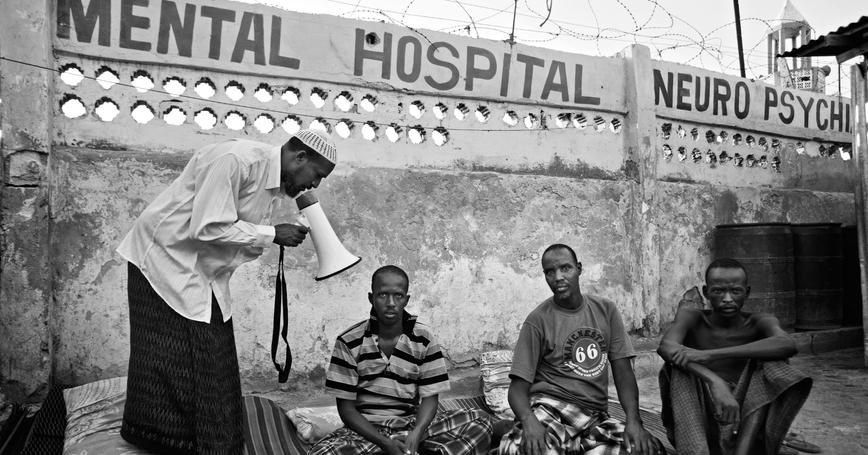
One of the most significant factors affecting human health is mental health. According to the World Health Organization, mental health is a state of well-being in which an individual realizes his or her abilities, can cope with the normal stresses of life, can work productively and fruitfully, and can contribute to his or her community. Talking about our mental health also includes our emotional, psychological, and social well-being.
Psychological disorders or mental illnesses refer to all conditions that affect your thinking, feelings, mood, and behavior. A close look at mental illness shows that it is closely related to vulnerability, both in its causes and effects.
Africa often disregards mental health and gives it low or no priority. The ignorance stems from the fact that most Africans were not taught that mental health is not a non-African issue but an overall health issue. This notion that mental health is a non-African issue has taken us to a point where it is treated as something lacking significance and value. Several challenges face African society including poverty, infectious diseases, maternal and child morbidity, and conflict. As a result, political leaders and international development agencies overlook the importance of mental health.
Mental health is a social construct. This simply means that different societies, groups, cultures, institutions, and professions have diverse ways of conceptualizing their nature, causes, and treatment if any. Different societies understand mental health in different ways. One would not be wrong to say that mental health is such a fuzzy area.
Health and well-being are not possible without sound mental health, but unfortunately, there are too many people in the African region who lack access to mental health treatment.
Research conducted in Uganda shows that the term ‘depression’ is not culturally acceptable among the country’s people. Another research conducted in Nigeria reveals that people with mental disabilities have difficulties expressing these needs and having them met. The truth remains that mentally ill patients constantly face abuse and neglect in society and even in the facilities and institutions that care for them. Mental illness can be exhausting in Africa. When they have to ask for help, it is harder.
There’s so much stigma and taboo about mental illness in society. This is because even if a person knows he has a mental health issue, he hesitates to get treatment and counseling. This is due to the fear of being judged and called an ‘Insane’ or ‘Mentally retarded’ individual.
A young vibrant African student struggles with depression and drops out of school. He tells his parents about his mental struggles. How he feels life has nothing to offer him anymore. His African parents react in a way that suggests “you must be crazy and useless” for saying such a thing. His condition is immediately dismissed as a non-issue. He is severely rebuked and warned never to mention his condition outside the family circle. The overly religious ones immediately take this son to a church where deliverance sessions are organized to cast out the demon from him.
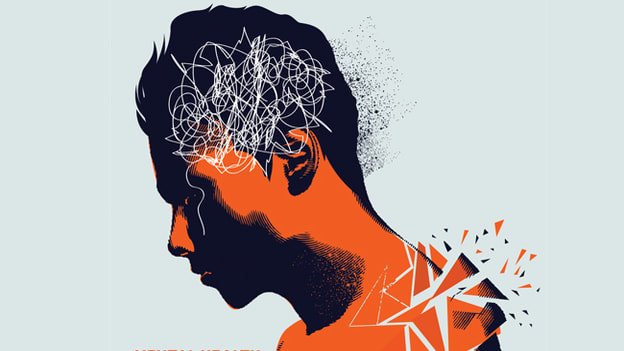
His parents wonder why their son is depressed and worry more about what people would say. He must come out of it because depression is not an African disease. Such a discussion is done discreetly so that no one hears.
If only there was a way to make them understand that depression is emasculating when you live through the experience. If only they could imagine what it’s like to experience total collapse and inability to handle life basics. Depression is a serious illness like cancer. The only difference is that it all happens inside your head. People in this battle fight every day, masking their pain behind smiles. They must act strongly to be what society expects them to be.
Depressive episodes can be compared to the world swallowing you whole and closing your eyes.
In African communities, you hear ludicrous things like, “Suicidal thoughts will send you to hell”. Isn’t that ignorance at its peak? People struggle with mental illness. However, because it’s regarded as something lacking significance and importance, many struggle to remain silent and hide away.
Mental and physical health are connected and inseparable. This means that both are inseparable. Certain diseases such as hypertension, diabetes, HIV, and tuberculosis have high mental health co-morbidity levels.
People suffering from mental illnesses such as bipolar, schizophrenia, and severe depression have a shorter lifespan according to research in Ethiopia. These people tend to die 30 years earlier than the general population, mainly from infectious causes.
Many people find it difficult to understand that there are times when everything moves so well in your life except for your mental health. Just like physical illnesses like fever, vomiting, diarrhea, and mental illnesses like anxiety, persistently low mood, lethargy, depression, and illusions are very real to the person struggling with them.
Sadly, people living with mental illnesses, especially very severe ones, are stigmatized, shunned, and excluded from mainstream society, especially in African society. Human rights abuses frequently affect schizophrenia, bipolar mood disorder, and epilepsy.
They are cast away because society believes that psychosis, hallucinations, or epileptic seizures are signs of demon possession or evil spirits. Unfortunately, many are denied access to life-changing treatment.
Those who find treatment centers in Africa drift into poverty through increased healthcare expenditures, disability, and stigma. When mentally challenged persons are cast out and abandoned by family members and society, they have no choice but to eke out an existence on the streets. In some cases, they even settle for garbage.
Nigeria records suicide stories every year, especially among youths, yet mental health issues remain trivialized and spiritualized. Everyone is afraid to talk about it or admit to openly having it, just because society says it.
Victor Ugo, a Nigerian who founded the Mentally Aware Initiative maintains that mental needs are inadequately addressed in Nigeria. He points out how archaic the lunacy act is. This Lunacy Act is a pre-independence mental health law that legalizes the rampant human rights abuses people mentally challenged face and also the very low mental health literacy of the majority of the population.
He further explains the existence of non-political will and commitment from those in authority (the decision makers) which results in a lack of funding for programs, capacity building, and research. Ugo believes that stigma in Nigeria and most countries in Africa remains the biggest obstacle facing mentally challenged people. This prevents them from receiving all the support they need.
There are so a variety of things that can trigger depression or even suicidal thoughts in African society. However, mental health issues continue to be ignored. Many people work in toxic places to earn a decent living. They have no choice but to cling to jobs that affect their mental health. This is the reason most bars are filled up every evening/weekend because many people especially men have chosen to fix their mental health there.
Women stuck in toxic marriages have no choice but to endure and remain in them, regardless of their mental health. Our society and religion frown upon divorce. Many families do not welcome walking away from a toxic marriage despite the grievous effect it will have on the mental well-being of the involved.
A person diagnosed with depression or any other condition in Western society would put his entire life on hold and face treatment and recovery. Africans have a different approach to mental health. There are many things an African man considers more significant than his mental challenges. For this reason, recovery is not always his sole focus.
The government doesn’t even consider mental health a problem to tackle, even though it knows it kills many people. Unknown to our government is that neglecting mental health makes it difficult to attain many of the sustainable development goals related to poverty, HIV, malaria, gender empowerment, and education.
If Africans can improve their mental health, it will greatly unlock the continent’s development potential, which has been neglected in the development chain. Prioritizing mental health in the African region can greatly increase other health benefits. Socioeconomic challenges can also be overcome if mental health is given a higher priority.
To effectively address and improve mental health in Africa requires a positive attitude towards it. People’s attitudes and mindsets toward those mentally challenged must be transformed.
Society can also address mental illness stigma by increasing awareness and prioritizing treatment. African communities need sensitization programs loaded with information, aimed at removing mental health stigma. These programs should encourage people to seek assistance when and where they need it.
Primary healthcare workers can be educated and trained to recognize common signs and forms of mental illness, especially at the point of contact.
It’s about time Africans stopped neglecting mental health issues and paid more attention to them. This is because mental health does not just affect the suffering individual, but has cascading consequences for the society at large.