
 As an immigrant, there are certain things about life in Britain that I noticed almost immediately.
And then there are things I didn’t really understand until I had lived here for a while.
One of those things was having pets.
Where I come from, having a dog or a cat is not necessarily as common as I have found it to be here. So when I first noticed how many British families had pets, I found myself quietly wondering what I was missing.
Were they simply animals, people kept at home?
Or had they somehow become something much bigger?
That question became even more interesting to me because of one of my neighbours.
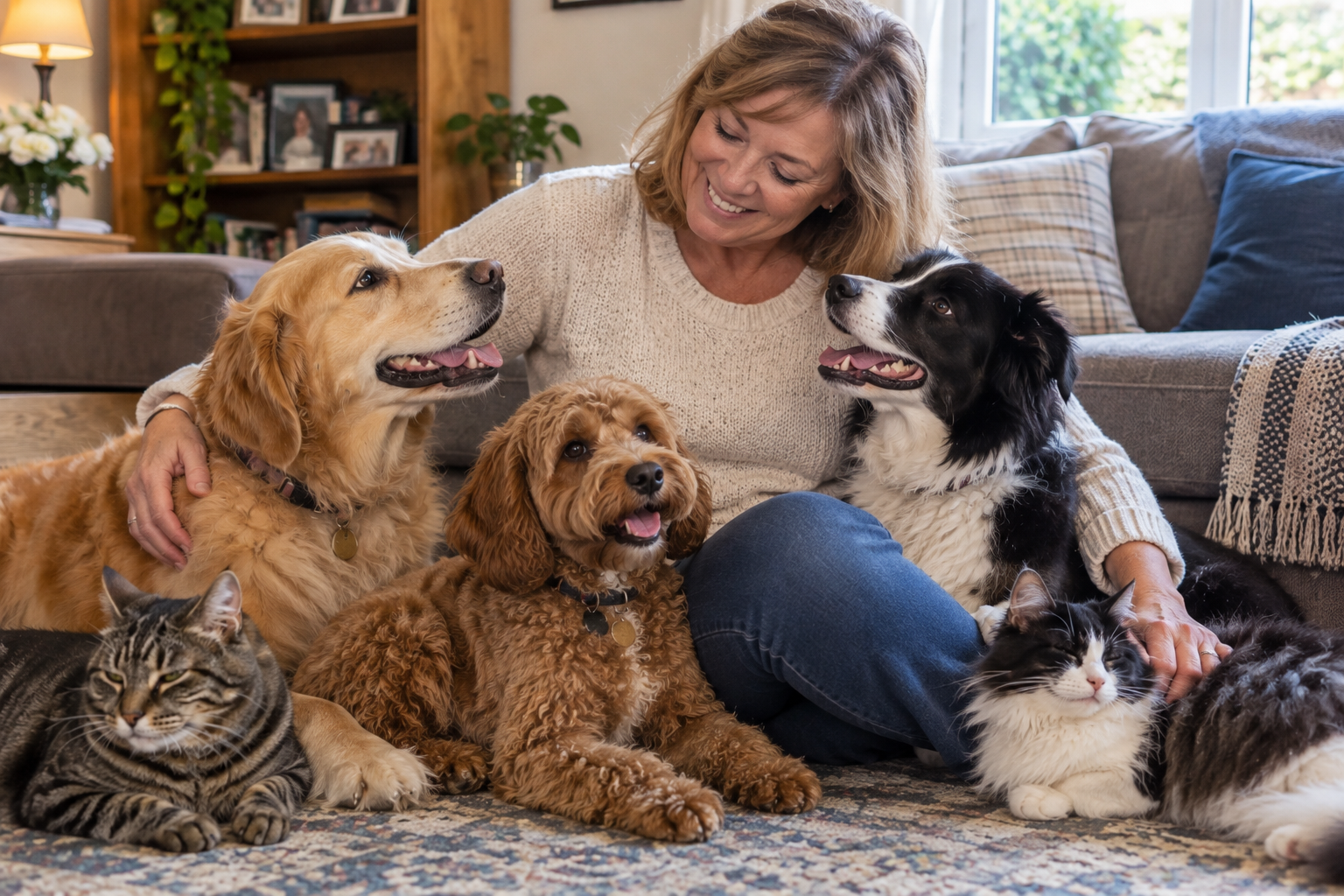
She has three different breeds of dogs and two cats.
Yes, you read that correctly.
Three dogs.
Two cats.
I have had several conversations with her over time, and the more she talked about her animals, the more I began to realise that her pets were not simply animals that happened to live in her house.
They were part of her everyday life.
There were routines around them. Conversations about them. Responsibilities. Funny stories. Worries. Affection. Even little frustrations about their behaviour.
And somewhere in all those conversations, I began to see pets differently.
I had always understood that people loved their animals. What I hadn’t fully appreciated was how much having a pet can weave itself into the emotional fabric of a person’s everyday life.
It isn’t just about having something furry to cuddle after a difficult day.
Sometimes, it is about having something that needs you to get out of bed.
Sometimes, it is about having a reason to step outside when you would rather stay indoors.
Sometimes, it is about coming home to a living being that is genuinely excited to see you.
And sometimes, perhaps most importantly, it is about having companionship that doesn’t require a long explanation.
My conversations with my neighbour made me look at pet ownership through a completely different lens.
So, rather than giving you another list of the usual “benefits of having a pet,” I want to explore something slightly different.
What happens when an animal becomes part of the rhythm of your life?
And what might that teach us about connection, routine, responsibility and emotional wellbeing?
I Started Looking at Pets Differently
Before moving to Britain, I don’t think I had spent much time thinking about the emotional relationship people could have with their pets.
A dog was a dog.
A cat was a cat.
Of course, people cared for them. But I hadn’t really considered how deeply an animal could become woven into someone’s daily life.
My neighbour helped me see this differently.
Listening to her talk about her dogs and cats, I noticed something.
She didn’t talk about them as though they were just possessions.
She knew their different personalities.
She knew which one behaved differently from the others.
She noticed when something wasn’t quite right.
She had stories about them.
She worried about them.
She laughed because of them.
And she had built routines around them.
That made me think about something we often overlook when talking about emotional wellbeing.
Sometimes, the things that support us emotionally are not dramatic things.
They can be ordinary parts of everyday life that quietly give us a reason to keep moving.
There Is Something About Being Needed
One thing that stood out to me from my conversations with my neighbour was responsibility.
Pets need you.
They need to be fed.
They need care.
Dogs need to be walked.
Animals need attention.
They depend on their owners in ways that cannot simply be postponed because you are having a difficult day.
And I began thinking about how powerful that can be.
There are days when a person may feel completely disconnected from everything around them.
You may not feel motivated.
You may not feel particularly excited about the day ahead.
You may even feel like withdrawing from everyone.
But there is still a living creature depending on you.
That doesn’t magically solve whatever you are going through. And I would never suggest that getting a pet is a treatment for mental health difficulties.
But having responsibility for another living being can create structure.
There is something you have to do.
Something that needs your attention.
Something that reminds you that your day is not entirely about how you feel at that particular moment.
The Mental Health Foundation’s guidance on pets and mental health also highlights companionship, routine, physical activity, and opportunities for social connection as some ways pets may support mental wellbeing.
A Reason to Leave the House
This one particularly caught my attention when I thought about dogs.
A dog needs to be walked.
You cannot simply decide that you don’t feel like seeing the outside world today and expect the dog to understand.
You still have to put on your shoes.
You still have to open the door.
You still have to walk.
And something interesting can happen when you do.
You may see the same people regularly.
You may greet another dog owner.
You may exchange a few words with a neighbour.
You may notice a park you had never paid attention to before.
You may simply spend twenty minutes outside instead of twenty minutes sitting indoors scrolling through your phone.
That doesn’t mean every dog owner is lonely or that every person who feels isolated needs a dog.
It simply made me realise that some pets naturally create opportunities for movement, routine and human interaction.
Sometimes connection begins with something as simple as:
“Your dog is beautiful.”
And suddenly two strangers are having a conversation.
Pets Can Become Part of the Family Story
Perhaps one of the things I understand better now is why people can become so attached to their pets.
When an animal lives with you for years, it doesn’t remain separate from your memories.
It becomes part of them.
You remember the first day you brought it home.
You remember the silly things it used to do.
You remember the way it behaved when the children were younger.
You remember holidays, birthdays, difficult seasons and ordinary evenings.
The pet is simply there through all of it.
And that means that when people talk about losing a beloved pet, the grief can be much deeper than someone who has never experienced that relationship might understand.
They are not necessarily grieving “just an animal.”
They may be grieving a companion who was present during a significant part of their life.
That distinction matters.
There Is Something Beautiful About Uncomplicated Companionship
Human relationships can be complicated.
We misunderstand one another.
We disappoint one another.
We sometimes say things we wish we hadn’t said.
We worry about how people perceive us.
We wonder whether someone is upset with us.
We replay conversations in our heads.
Pets don’t require that kind of social calculation.
When you walk through the door, your dog isn’t wondering whether your outfit looks good.
Your cat isn’t asking why you didn’t respond to their message.
They simply recognise you.
There is something comforting about that.
Of course, pets have their own personalities and can certainly be demanding, mischievous and occasionally difficult.
But the companionship can still feel wonderfully uncomplicated.
For someone who has had a difficult day, that kind of welcome can mean more than we sometimes realise.
What About Those of Us Living Far From Home?
This is where my own experience as an immigrant made the subject even more interesting to me.
When you move away from the country where you grew up, you don’t just change your postcode.
You leave behind familiar people, familiar streets, familiar routines, and sometimes the little things you never realised made you feel at home.
I have written before about the mental health cost of living abroad and how being thousands of miles away from home can affect us emotionally. If you have ever wondered why living abroad can sometimes feel emotionally complicated even when things are going well, you may want to read When Home Is Thousands of Miles Away: The Mental Health Cost of Living Abroad.
Perhaps this is another reason I became so fascinated by what I observed in my neighbour’s home.
Pets can become part of what makes a place feel like home.
The familiar sound of paws.
A dog waiting at the door.
A cat curled up in its favourite spot.
A daily walk that becomes part of your routine.
These things may seem small, but home is often made up of small things.
For someone living away from where they grew up, those everyday rituals can become surprisingly meaningful.
But Let’s Not Romanticise Pet Ownership
My neighbour’s story also reminded me that pets are a responsibility.
A pet is not a decorative object.
It needs time, money, attention, patience and commitment.
There are veterinary bills.
There are feeding costs.
There are times when your plans have to change.
There are holidays to think about.
There are moments when the animal is unwell.
There are responsibilities that continue even when you are tired.
So, while we can talk about the emotional benefits of having pets, we should also be honest about what pet ownership requires.
A pet should not be treated as a quick solution to loneliness or emotional difficulties.
A pet deserves a home where it can be properly cared for.
And a person deserves to make that decision carefully.
What My Neighbour Made Me Realise
I don’t think I will ever look at pets quite the same way again.
Before, I mostly saw animals.
Now, I see relationships.
I see routine.
I see responsibility.
I see companionship.
I see the little moments of connection that can become part of someone’s everyday life.
And perhaps this is what surprised me most as an immigrant.
Sometimes, moving to another country teaches you about the new country.
But sometimes, it teaches you something about yourself.
You begin noticing things you never questioned before.
You discover that people organise family life differently.
They build relationships differently.
They create comfort differently.
And sometimes, you learn something simply by listening to your neighbour talk about her three dogs and two cats.
I started this conversation thinking I was learning about pets.
Perhaps I was actually learning about connection.
Because when we talk about emotional wellbeing, we often focus on the big things.
Therapy.
Friendships.
Family.
Community.
Self-care.
But perhaps we should also pay attention to the small, everyday relationships that give our lives rhythm.
The creature waiting at the door.
The morning walk.
The feeding routine.
The familiar presence beside you on the sofa.
The little life that depends on you and, in its own way, becomes part of yours.
I came to Britain and discovered that, for many families, pets are much more than animals living in the house.
They are part of the household.
And after listening to my neighbour talk about three dogs and two cats, I think I finally understand why.