
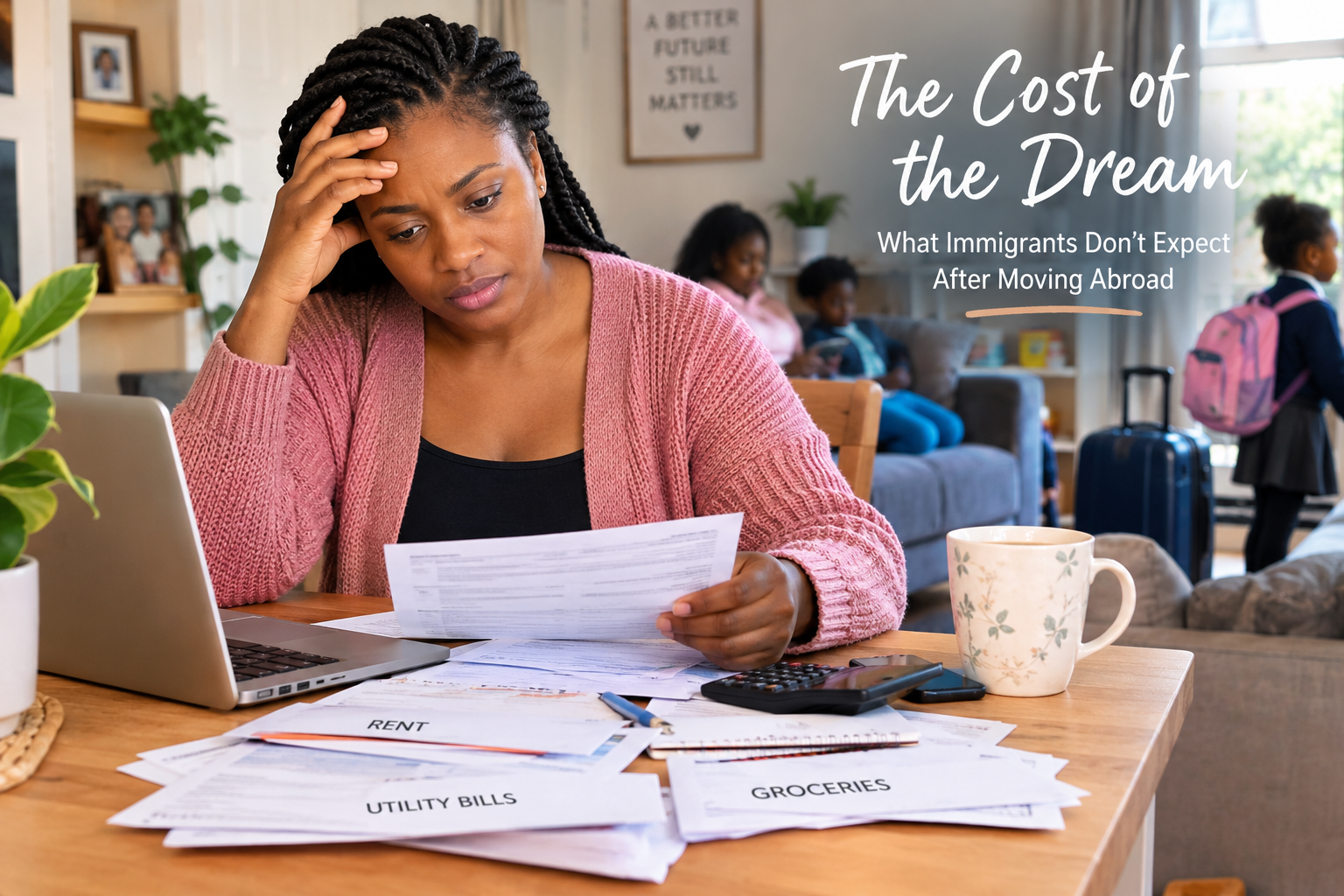
You moved abroad because you wanted a better life.
Better opportunities. A better future for your children. A chance to earn more, build a home, support your family, and create opportunities that may not have been available to you back home.
You prepared yourself for the journey.
What you may not have prepared yourself for was the cost of maintaining the life you came abroad to build.
Because nobody really tells you about the endless bills.
The Bills Never Stop
There is rent or a mortgage.
Electricity. Gas. Water. Internet. Phone bills. Insurance. Transport. Groceries.
And just when you think you’ve finally caught up, another expense appears.
The children need new shoes because they’ve outgrown the old ones.
There is a school trip to pay for.
The car needs repairing.
The washing machine breaks down.
The grocery bill is suddenly higher than it was last month.
One bill gets paid, and another arrives.
Sometimes your salary feels as though it has already disappeared before it even reaches your account.
And this can be incredibly stressful.
You may have a job. You may have a home. Your children may be settled in school. From the outside, everything may look fine.
But inside, you are constantly calculating.
Can we afford this?
What can wait until next month?
What happens if something unexpected happens?
That mental load can become exhausting.
If financial pressure is becoming overwhelming, you may find MoneyHelper’s Budget Planner useful for getting a clearer picture of where your money is going.
Raising Children Abroad Is Another Responsibility
For many immigrants, the decision to move wasn’t only about themselves.
It was about their children.
You wanted them to have better opportunities, a good education and the freedom to dream bigger.
But raising children is expensive anywhere.
School uniforms, shoes, coats, lunches, school trips, activities, technology, birthdays and childcare can quickly add up.
And children don’t stop needing things because money is tight.
As parents, we often try to protect our children from financial worries. We make the calculations quietly and try to provide what they need without making them feel the pressure.
But who carries that pressure?
Usually, we do.
Then There Is Work
Perhaps the most frustrating part is that you have to keep working regardless of how tired you are.
You may have worked a long shift.
You may be physically exhausted.
You may have spent the entire day dealing with difficult people or stressful situations.
But tomorrow, you go again.
Because the bills don’t take a day off.
Your children’s needs don’t take a day off.
The mortgage doesn’t take a day off.
So you keep going.
Sometimes you work extra hours or take on additional responsibilities simply because you need the money.
Not because you are chasing wealth.
Not because you are obsessed with your career.
Because life is expensive.
And for some immigrants, there is another layer to this.
You may have arrived with qualifications, professional experience and years of expertise, only to find yourself working in a completely different field.
Starting again can be humbling.
But when there are bills to pay and children depending on you, you don’t always have the luxury of waiting for the perfect opportunity.
You work.
You adapt.
You keep moving.
When Family Back Home Also Needs You
For many immigrants, your financial responsibilities don’t end when you cross the border.
There may still be parents, siblings or relatives back home who need help.
A family emergency happens.
Someone needs medical treatment.
A sibling needs support.
A relative calls because they believe you can help.
And sometimes, you send money even when your own finances are stretched.
Because when you’re the person abroad, people may assume you’re doing better financially than you actually are.
They see the pounds or dollars.
They don’t always see the bills attached to them.
They don’t see the cost of living.
They don’t see how carefully you had to budget that money.
You Can Be Grateful and Still Be Tired
This is something immigrants should be allowed to say without feeling guilty:
You can be grateful for your new life and still find it difficult.
You can appreciate the opportunities your new country has given you while being overwhelmed by the cost of living.
You can love your children and still feel exhausted by the responsibilities of parenting.
You can appreciate having a job and still be tired of working.
You can be proud of how far you’ve come and still wonder when life will finally feel financially comfortable.
These feelings don’t make you ungrateful.
They make you human.
If the pressure of everyday life is beginning to affect your emotional wellbeing, it is worth taking your mental health seriously. NHS Every Mind Matters offers practical advice for looking after your mental wellbeing and managing stress.
And sometimes, the emotional weight of adjusting to life abroad can be difficult to put into words. If you’ve ever felt disconnected or alone despite being surrounded by people, you may relate to my article, The Loneliness Nobody Talks About.
Don’t Forget Yourself
In the middle of paying bills, working, raising children and supporting family, it is easy to put yourself last.
You tell yourself:
I’ll rest later.
I’ll save for myself later.
I’ll do something for myself when things settle down.
But sometimes “later” keeps moving further away.
Your life shouldn’t consist entirely of working to pay for the life you are too exhausted to enjoy.
You deserve moments of rest.
You deserve to enjoy your children.
You deserve to celebrate your progress.
And you deserve to spend some time being more than the person who pays the bills and solves everyone’s problems.
This is also where self-care matters. But what happens when you don’t even have the energy to take care of yourself? I explored this in When There Is Zero Energy for Self-Care: How ’80s and ’90s Music Saves My Sanity.
The Dream Is More Than Money
Perhaps the dream didn’t turn out exactly as you imagined when you first arrived.
Maybe it has been more expensive.
Maybe you’ve had to work harder than expected.
Maybe there have been moments when you’ve questioned whether you made the right decision.
But look at what you are building.
Perhaps your children now have opportunities you never had.
Perhaps you’ve created a home in a place that was once completely unfamiliar.
Perhaps you’ve developed strength and resilience you didn’t know you possessed.
The immigrant journey isn’t simply about moving from one country to another.
It is about building a life while carrying responsibilities, expectations, sacrifices and dreams.
And sometimes, building that life also means learning to establish boundaries, protect your energy and stop constantly putting everyone else first. If you struggle with putting everyone else’s needs before your own, you may also want to read Break Free from the Chains of People-Pleasing: Reclaim Your Mental Well-Being.
So yes, pay the bills.
Go to work.
Raise your children.
Build your future.
Support your family when you can.
But remember this:
You came abroad to build a better life—not simply a more expensive one.
And somewhere between earning, spending, providing and surviving, make sure there is still room for you to live.
